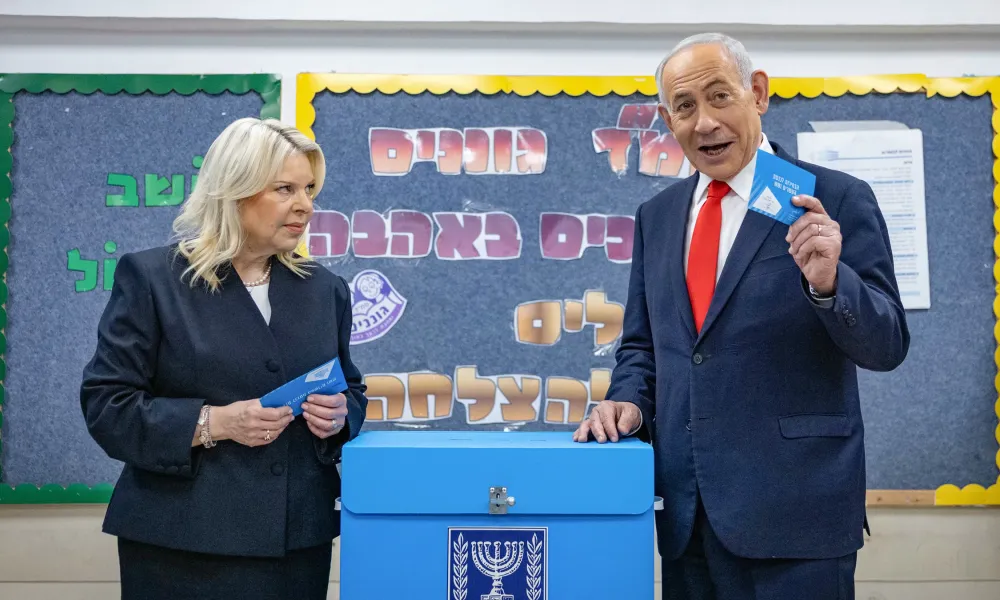

The possibility of a renewed escalation in the conflict with Iran could influence efforts to form a government in Israel and prolong Benjamin Netanyahu’s stay in power, according to international relations expert and political analyst Charalambos Chrysostomou.
Speaking on Politis Radio's programme Morning Briefing with Katerina Eliadi, Chrysostomou described Israel's post-election landscape as exceptionally complex, with no political bloc securing the 61 seats required for a parliamentary majority.
As a result, Netanyahu remains caretaker prime minister while coalition negotiations continue, a process that could last for weeks or even months. If no viable coalition emerges, fresh elections remain a possibility.
Possibility of a new Iran escalation
Chrysostomou suggested that a renewed military escalation involving Iran could have direct political consequences.
"We may see a new intensification of the conflict with Iran," he said, arguing that such a development could affect government formation efforts by placing Israel in a new period of intensive military operations.
He raised the possibility that either the conflict itself or its political management could help extend the current political situation, potentially allowing Netanyahu to remain in office for longer or even leading to the formation of an emergency national unity government.
The analyst stressed that these scenarios remain speculative, linking them to recent statements by both Netanyahu and US President Donald Trump regarding continued confrontation with Iran.
Why right-wing forces gained ground
Discussing the election result, Chrysostomou argued that one of the clearest conclusions was the strengthening of right-wing and far-right political forces among Jewish Israeli voters.
Although Netanyahu's bloc failed to secure an outright parliamentary majority, the results suggest that a significant section of Israeli society continues to support hard-line positions on security and foreign policy issues.
According to the analyst, periods of war tend to favour political forces that project decisiveness and toughness because they resonate more strongly with public feelings of insecurity.
He noted that Netanyahu had faced severe criticism over both the intelligence failures surrounding the 7 October 2023 Hamas attack and the subsequent handling of the Gaza war and hostage crisis.
However, despite widespread protests and public dissatisfaction, the opposition failed to convert that discontent into a decisive electoral breakthrough.
Chrysostomou linked this outcome to Israel's military operations against Iran, arguing that the external threat helped rally support around right-wing, far-right and ultra-Orthodox parties.
He also referred to the controversy over compulsory military service for ultra-Orthodox Jews, saying that despite ongoing criticism of draft exemptions, the issue did not appear to significantly weaken support for the parties representing that constituency.
Arab parties' gains complicate coalition maths
The analyst highlighted the strong performance of Israel's Arab parties, which collectively secured 19 seats according to the election results discussed during the interview.
He described the outcome as historically significant and indicative of growing electoral mobilisation among Arab Israeli voters.
The numbers create an unusual parliamentary equation. The opposition's 48 seats, combined with the 19 held by Arab parties, would theoretically amount to a 67-seat majority in the Knesset.
However, Chrysostomou stressed that parliamentary arithmetic does not automatically translate into a governing coalition.
The principal obstacle, he said, remains major political disagreements between opposition parties and Arab political groups, particularly on the Palestinian issue.
While Arab party leaders have expressed willingness to cooperate in efforts to remove Netanyahu from office, other opposition forces remain divided on such a strategy.
Gadi Eisenkot, who leads the main opposition bloc, has not clarified whether he would accept such cooperation and had rejected the idea during the election campaign.
By contrast, figures from the centre-left have advocated broader cooperation aimed at ending Netanyahu's rule.
According to Chrysostomou, the challenge extends beyond Jewish-Arab relations and reflects deeper policy disagreements within the opposition itself.