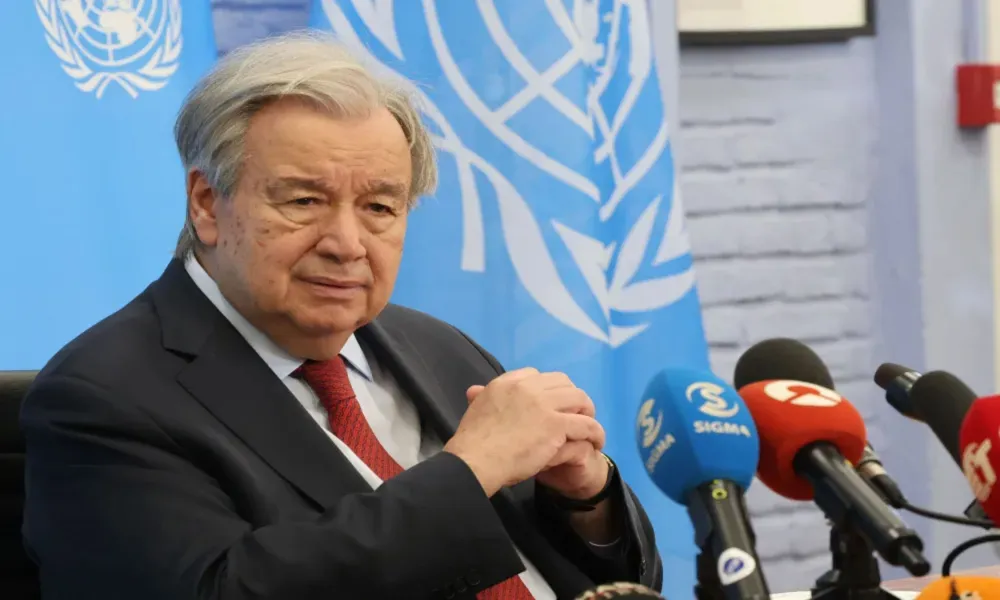

UN Secretary-General António Guterres did not succeed in restarting Cyprus reunification talks during his three-day visit to the island. Nor did he secure a date for a new expanded 5+1 meeting involving the two communities and the guarantor powers.
What he did achieve was bringing all sides back onto a common path towards a future conference, something that only months ago appeared far from certain.
Most significantly, Guterres reintroduced the concept of existing convergences reached during previous negotiations and, by extension, the negotiating framework established through UN Security Council resolutions. While he stopped short of explicitly reaffirming a bizonal, bicommunal federation as the basis for immediate talks, his references to "substance" and to "convergences already achieved" effectively ruled out starting from scratch or pursuing a fundamentally different model.
Convergences preserve the Crans-Montana acquis
The strongest political message from Guterres' remarks was his reference to past convergences.
That allows the Greek Cypriot side to argue that the negotiating acquis up to Crans-Montana has been preserved and that there is no shift towards a two-state framework.
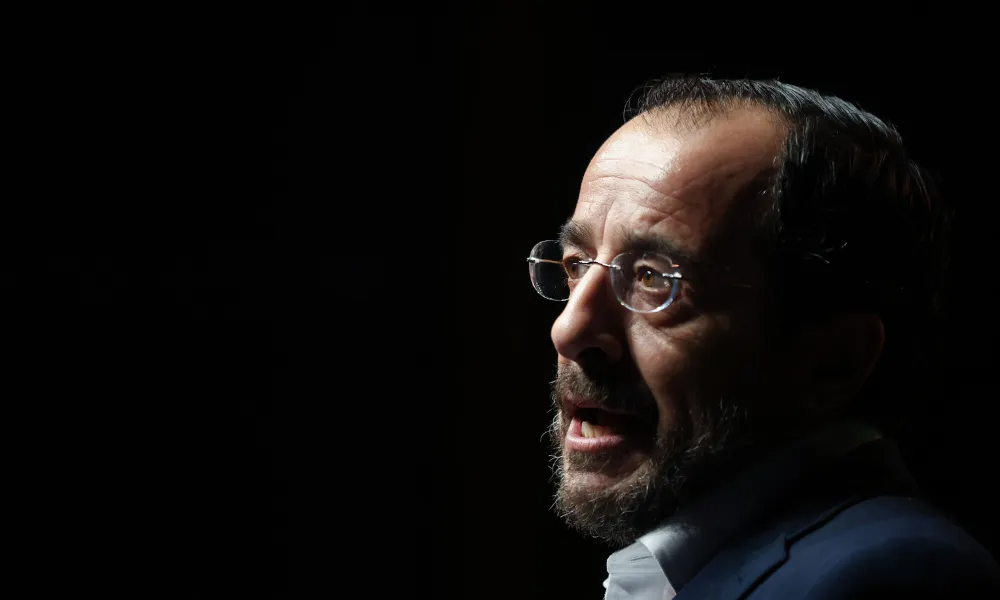
President Nikos Christodoulides interpreted the visit as confirmation that any future process remains anchored in UN resolutions, previous convergences and the point at which negotiations broke down in 2017.
However, analysts caution against assuming that talks can simply resume where they ended nine years ago.
Since Crans-Montana, political realities have changed considerably. Turkey has formally adopted a two-state position, trust between the sides has eroded and substantial differences remain over political equality, effective participation, security and guarantees.
Guterres did not resolve those disputes. He merely created a process through which they might be addressed.
Methodology becomes the key battleground
The most important word in Guterres' statement may not have been "substance" but "methodology."
That is where the real negotiations are likely to take place in the coming weeks and months.
Turkish Cypriot leader Tufan Erhürman has outlined four core demands: confirmation of political equality before talks begin, preservation of existing convergences, a defined timetable and safeguards against simply returning to the status quo if negotiations fail again.
The first two points may be bridgeable. The latter two are likely to prove more difficult.
The Greek Cypriot side is unlikely to accept any formula that could lead to international upgrading of the self-declared Turkish Cypriot state if talks collapse. At the same time, Erhürman is reluctant to enter another open-ended process without clear timelines or consequences.
Guterres did not endorse Erhürman's positions outright, but he effectively acknowledged them as issues that need to be addressed before a new conference can be held.
Confidence-building measures face first test
The UN chief also placed significant emphasis on confidence-building measures (CBMs).
His approach suggests that rebuilding trust is not a secondary matter but part of the political problem itself.
The aim is to identify practical measures that improve daily life and demonstrate that the two sides can still cooperate.
Yet CBMs could either create positive momentum or become another prolonged process that delays discussion of the core issues.
A key question is whether implementing specific measures will be a prerequisite for convening the next expanded meeting.
Christodoulides has argued that progress on CBMs would be beneficial but should not be treated as a formal condition. The overall wording of Guterres' remarks, however, links preparations on CBMs directly to the success of any future conference.
What happens next
The most likely next step is not an immediate conference but a period of intensive diplomatic preparation led by UN envoy María Ángela Holguín.
Her task will be to establish common ground on three issues:
- Which past convergences remain valid;
- How political equality should be interpreted;
- What methodology should govern future negotiations.
At the same time, efforts will focus on securing a limited but visible package of confidence-building measures that can demonstrate political will on both sides.
If that groundwork succeeds, a future 5+1 meeting would not simply be another exchange of views. It would be intended to announce the formal resumption of negotiations, supported by an agreed framework, process and possibly a timetable.
A cautiously positive outcome
The decisive factor remains Turkey.
The election of Erhürman has softened Turkish Cypriot rhetoric and reopened discussion of a federal settlement. Ankara, however, continues publicly to support a two-state solution and sovereign equality.
Guterres did not solve that contradiction. Instead, he temporarily bypassed it by using convergences and methodology as a bridge between competing positions.
The overall assessment is therefore cautiously positive.
Guterres prevented the deadlock from becoming permanent, preserved the existing negotiating acquis and secured agreement in principle for a new expanded conference.
What he did not achieve was agreement on how to restart negotiations.
Cyprus is not one mile from a settlement. It is still some distance away, and the immediate challenge is agreeing on how to return to the road that leads there.