
A few days ago, the UN Secretary-General visited Cyprus to reinvigorate the Cyprus peace process and remind the people of this beautiful island that they can reunite their country.
It was a historic moment, although I doubt it achieved the desired effect.
The official Greek Cypriot side is still leaking information that creates a negative climate instead of preparing public opinion for an agreement on the Cyprus problem.
What goes largely unnoticed, however, is the flawed way in which the Greek Cypriot leadership approaches such an important issue.
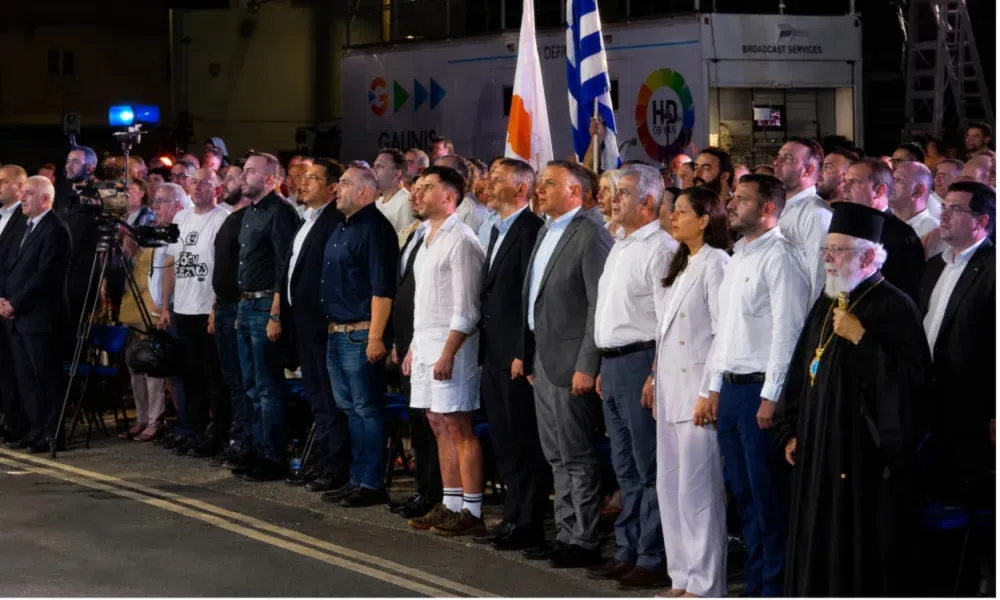
It appears that most citizens are more exercised by matters such as the shorts worn by MEP and political leader Fidias Panayiotou. People become angry about politicians' clothing rather than the absence of a strong commitment to achieving genuine peace in Cyprus.
Perhaps the traditional parties are partly to blame because they have failed to bring major issues to the forefront.
Fear of political cost and the desire for ever-greater popularity have led to political and ideological stagnation.
Who is going to shape policy and make difficult decisions when everyone is trying to improve their public image?
But times are changing.
New faces are entering politics.
In EDEK, a 27-year-old woman is seeking the party leadership.
Sophia Christodoulou Makri found the political courage to run for office against established figures from the party's front ranks.
And what was the reaction from some of the "senior" figures?
They objected to Sophia's candidacy, questioning the right of the party's youth leader to seek the EDEK presidency.
In the end, a strong wave of support emerged in Sophia's favour.
Some people still have not realised that victimisation in politics often produces the opposite result.
There is also something deeply miserable about trying to exclude an opponent simply because you suspect you cannot defeat them at the ballot box.
The question is which politician, man or woman, will succeed in freeing us from the misery of petty political calculation.
Our constant preoccupation with day-to-day issues and personal rivalries prevents us from seeing beyond the immediate moment.
We suffer from political short-sightedness.
The geopolitical map is changing, and serious states are developing long-term strategic policies.
We, meanwhile, seem capable of looking only as far ahead as 2028.
What will Cyprus look like in 2035?
Will it still be an island divided down the middle?
Will it be a country struggling desperately to preserve the status quo?
Will citizens in 2043 still be reading news reports about efforts to restart Cyprus talks?
How miserable is this constant repetition of events.
This attachment to the past and absence of political vision.
Perhaps the most depressing aspect of all is our inability to imagine a different Cyprus.
To understand that the peace dividend resulting from an end to the confrontation with the Turkish Cypriot community would bring significant benefits to the entire Cypriot population, including higher wages and a better standard of living.