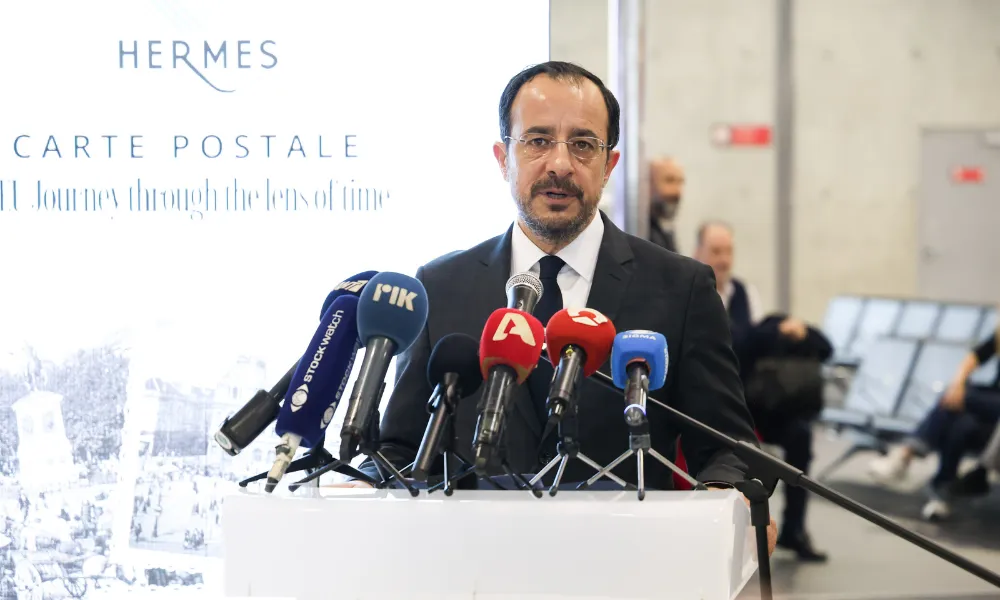

The President of the Republic, Nikos Christodoulides, in a recent interview with Phileleftheros, reiterated that “all government actions serve the great national goal of resolving the Cyprus problem.” At first glance, this is a declaration that hardly admits dispute: no Cypriot government could state otherwise without undermining its own institutional legitimacy. Politics, however, is judged not only by intentions but by the coherence between goals, choices, and outcomes. And it is precisely in this sphere that a serious contradiction emerges.
Resolving the Cyprus problem presupposes, in practice, a final understanding not only with the Turkish Cypriots but also with Turkey, which, as the occupying power, continues to play a decisive role in the issue. This condition requires Nicosia to act with strategic composure, avoiding moves or narratives that reinforce the image of a permanent, multi-layered confrontation with Ankara. Nevertheless, within the framework of the trilateral cooperation between Cyprus, Greece, and Israel, statements and leaks have recently been recorded that suggest this cooperation is acquiring characteristics of military or even geopolitical confrontation with Turkey.
Strategic framework
It is no coincidence that reports in international media, such as the Jerusalem Post, describe a “hardening” of the Greece–Cyprus–Israel trilateral partnership, with references to plans for military cooperation and coordination in 2026. Regardless of whether this information fully reflects reality or is amplified within broader regional narratives, the fact that it is neither denied nor balanced allows a problem of both image and substance to arise for Nicosia.
Cyprus undoubtedly has every reason to maintain and strengthen its relations with Israel—a country with a significant geopolitical footprint in the Eastern Mediterranean, technological superiority, and an enhanced role in security and energy matters. Bilateral and trilateral cooperation can function as a force multiplier for Nicosia. The critical question, however, is not whether this cooperation is useful, but under what terms and within what strategic framework.
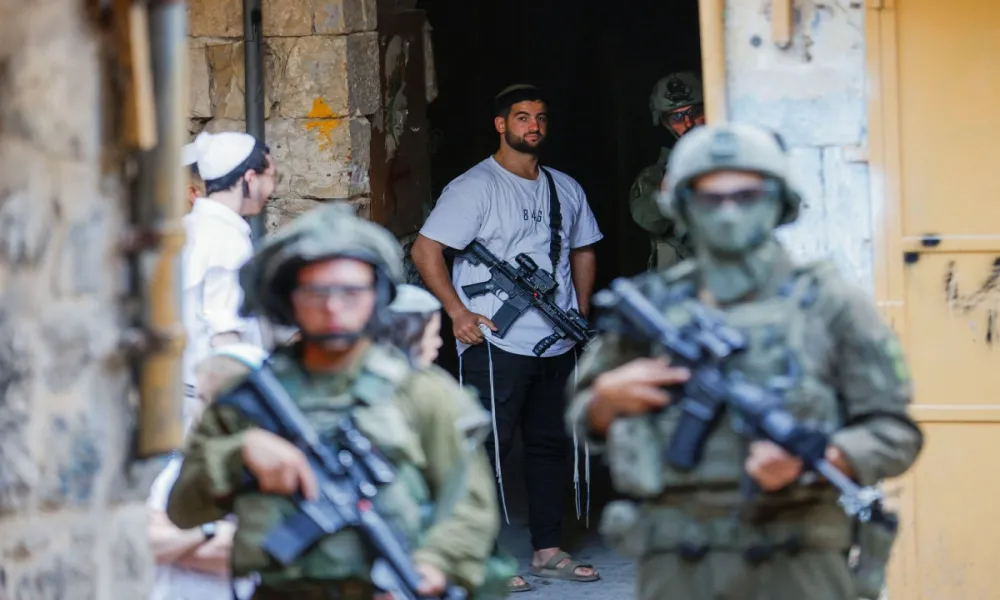
When Cypriot foreign policy increasingly “locks into” the Israel–Turkey confrontation, which focuses on issues related to Gaza and Syria, Cyprus risks paying the price of a tension that does not directly concern it. The discussion on installing Israeli air-defence systems on the island is indicative: regardless of its military rationale, it has already triggered public reactions and warnings from Ankara, which speaks of a “fragile balance” on the island. Specifically, Ankara repeatedly argues that Nicosia, through defence cooperation with Israel, Greece, or other partners, is turning the island into a “forward outpost” of foreign interests. Within this framework, air-defence systems are deliberately presented not as defensive, but as “part of a broader military architecture.” The result is a shift in the discussion away from the Cyprus problem as an issue of occupation and international law, towards yet another episode of regional military tension.
In this context, the image of an “anti-Turkey axis”—even if it is an oversimplification by the media—ultimately works in Turkey’s favour. It offers Ankara an easily digestible narrative according to which the Greek Cypriot side is not genuinely interested in a solution, but instead invests in alliances of deterrence and encirclement. This narrative resonates not only within Turkey, but also among segments of the international community that seek “balances” with Turkey rather than clear principled positions, as Nicosia insists. At the same time—and perhaps most dangerously—the logic of an anti-Turkey axis with Israel and Greece creates illusions among Greek Cypriots, some of whom believe that, with the help of these two countries, a genuine military counterweight to Turkish assertiveness is being formed.
The real weapon
As also noted in an analysis by Reuters, Nicosia has other tools at its disposal which, if used prudently, can exert pressure on Turkey through European levers: its accession process, participation in EU defence mechanisms, and its overall relationship with Brussels. This “European agenda” may well constitute the strongest diplomatic tool of the Republic of Cyprus. Indeed, Politico reported last week on concerns expressed by many European officials as to whether the Cypriot EU Presidency might create serious problems in Brussels–Ankara relations over the next six months. If, however, confrontation shifts to the Israel–Turkey arena, there is a risk that the European dimension will become blurred or downgraded.
Cyprus has an interest in remaining primarily a European issue: an EU member state with a problem of occupation, seeking a solution within the framework of United Nations resolutions. In this context, Turkey must both give and take. Shifting the centre of gravity to regional military balances, over which Nicosia has limited control, entails serious risks.
There is, of course, the counter-argument that the European strategy and cooperation with Israel are not competing options but complementary ones. The EU does not provide military security guarantees to Cyprus. European “pressure levers” on Turkey have proven limited, fragmented, and politically vulnerable; thus, some analysts argue, without basic deterrence the “European agenda” becomes little more than a wish without substance. The crucial question that must be answered, however, is whether, in the event of a hot incident, Israel would become involved on Cyprus’ side. The answer to this question is negative—so what value does deterrence have if it is not credible?
The interest
In conclusion, if resolving the Cyprus problem truly constitutes the “supreme priority,” as President Christodoulides repeatedly maintains, then Cyprus must assess its alliances with cool realism and without emotionalism. Cooperation with Israel is useful and, under certain conditions, necessary. However, permanent, structural confrontation with Turkey does not serve the long-term interests of the Republic of Cyprus. On the contrary, in some cases it appears to serve Tel Aviv more than Nicosia. This is a truth that, however uncomfortable, cannot be ignored in any serious discussion about the future of the Cyprus problem.
Israel’s interests do not necessarily align with a solution to the Cyprus problem, as it believes that a settlement—due to Turkish Cypriot participation in government—would bring Cyprus closer to Turkey. This position is understandable. Yet Cyprus’ attachment to Israel also carries the risk of turning the island, in the worst case, into a security buffer for Tel Aviv, like southern Lebanon or the Druze zone in Syria—without excluding the possibility of it becoming a theatre of military confrontation—and, in the best case, into an economic base and safe haven for our Israeli neighbours should new conflicts erupt.
What is our own Cypriot dream? To function as a European country in the region, developing relations of good neighbourliness and cooperation with all. We will come very close to achieving this goal if, in the coming months, the Cyprus problem is resolved. The President of the Republic, following his meeting with Tufan Erhürman, has stated in various briefings that Turkey and the Turkish Cypriot side have indeed returned to the rails of a federal solution. We do not underestimate the difficulties that exist, nor do we ignore Turkey’s repeated backtracking—especially after 2021—regarding the content of a solution. If, however, Nikos Christodoulides truly means what he says when he claims that resolving the problem is his “supreme priority,” then let us undertake some initiatives. It is preferable to begin building axes of peace rather than confrontation.