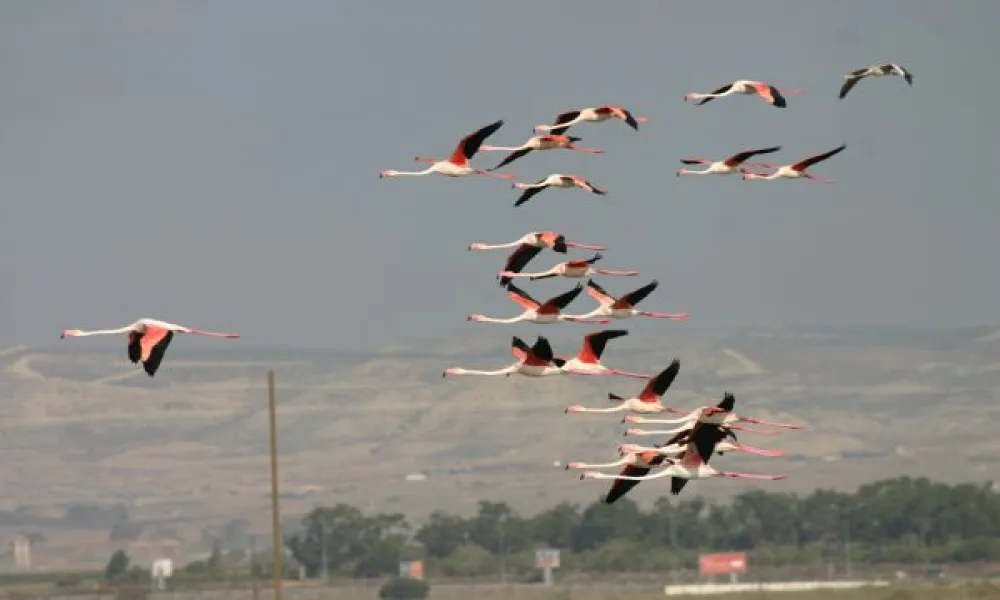
Larnaca Salt Lake welcomed its first flamingos of the season this week, marking the start of the annual migration period that transforms local wetlands into one of the most important wintering sites in the Eastern Mediterranean. Yet beneath the familiar spectacle lies a troubling trend: experts warn that Cyprus has seen a 14–31% decrease in flamingo numbers since 2013.
Speaking to CNA, Senior Officer of the Game and Fauna Service, Nikos Kassinis, said several hundred flamingos have already been recorded across the island. Cyprus hosts five natural wetlands that support the species: Akrotiri in Limassol, Larnaca Salt Lakes, Paralimni Lake, Oroklini Lake and, in the occupied Famagusta area, additional smaller lakes. On average, 5,000–10,000 flamingos spend the winter in these habitats, representing more than 1% of the Eastern Mediterranean population.
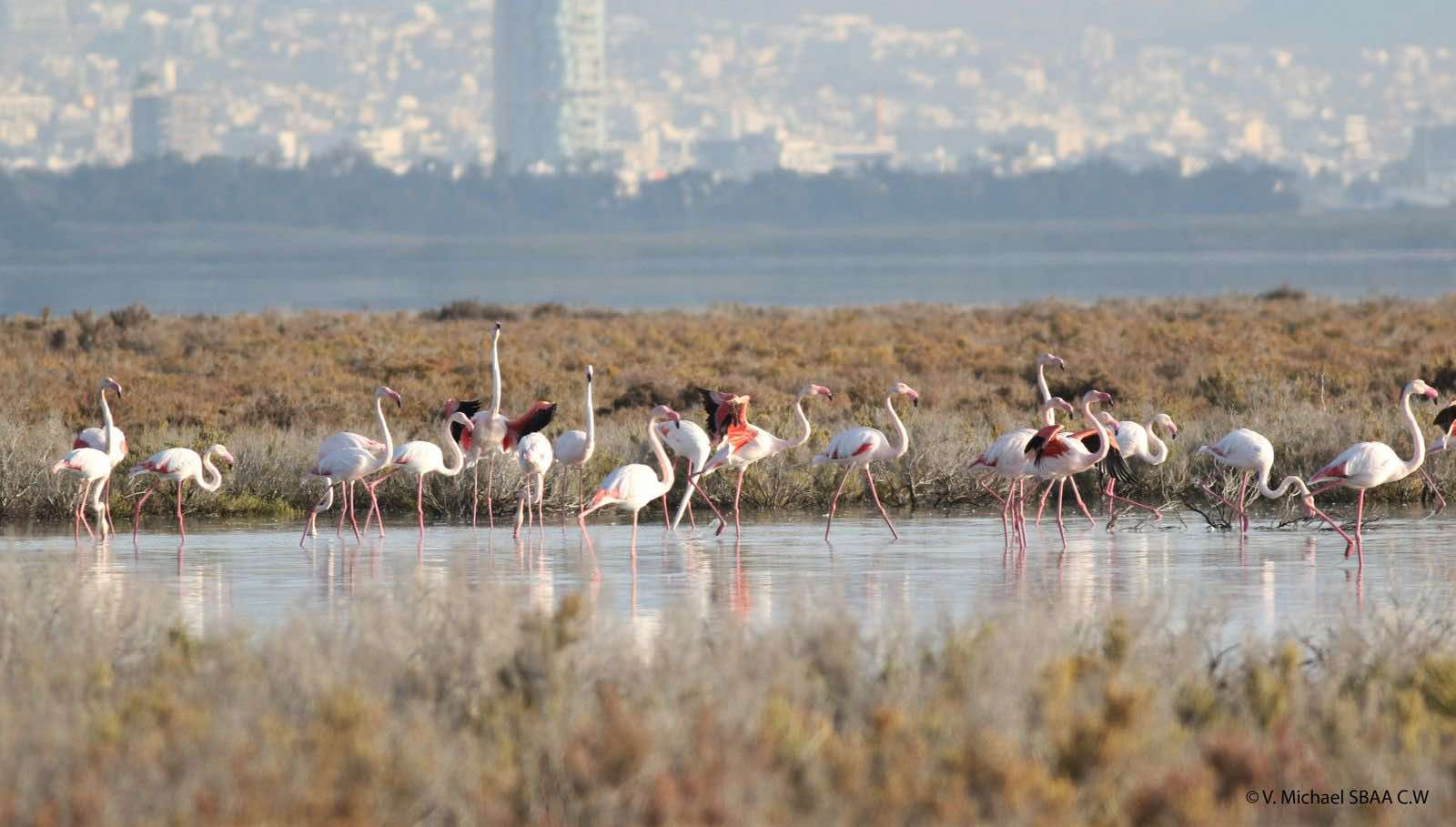
Long-term monitoring data from the Game and Fauna Service and BirdLife Cyprus, collected monthly for over two decades, confirms a steady decline. A summary of Cyprus’ flamingo status was recently presented at the 4th International Flamingo Symposium held in Italy, highlighting the environmental pressures behind the drop. Kassinis pointed to prolonged droughts, poor-quality water inflows that reduce food availability, development pressures and activities incompatible with wetland protection.
Part of the response is the Pandoteira Project, a ten-year EU-cofunded LIFE initiative that aims to close critical knowledge gaps on several species, including flamingos. The project examines feeding, nesting and resting requirements, as well as quantifying the threats they face. Closing these gaps, Kassinis said, will pave the way for targeted conservation measures within Natura 2000 sites.
Ultimately, the goal is to improve both species protection and the ecological resilience of the designated areas where these birds return each winter.
Source: CNA