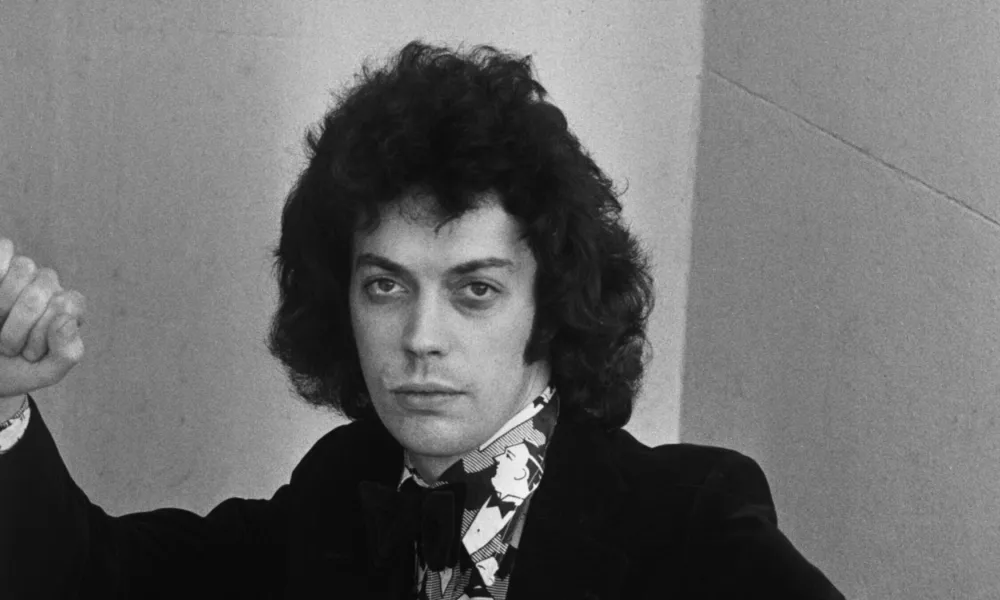



Tim Curry, the British-born actor whose flair for garish eccentricity made him a fixture of stage and screen, died on Tuesday at the age of 80. His death was confirmed by Marcia Hurwitz, his longtime agent and manager. Curry suffered a serious stroke in 2012, from which he said last year he had "been recovering for quite a long time."
With a mischievous charm, an easy physical grace and a rich, expressive voice, Curry became a favourite for roles built on villainy or outright cartoonishness. In the 1982 film adaptation of "Annie," directed by John Huston, he brought a memorably slippery quality to Rooster Hannigan, the con artist who schemes to kidnap the young orphan of the title. In "Clue" (1985), a spoof drawn from the board game, he played the fast-talking butler Wadsworth, herding a cast of murder suspects, including Madeline Kahn, Christopher Lloyd, Martin Mull and Eileen Brennan, through a haunted mansion at breakneck pace. He later played a self-satisfied billionaire villain in the 2000 film version of "Charlie's Angels," killed off just as his scheme appeared to succeed.
On Broadway, Curry earned a Tony nomination for playing King Arthur in "Spamalot," the 2005 musical built on Monty Python's telling of the Arthurian legend, a rare straight role that critics singled out as one of the production's strongest performances.
Defined by Frank-N-Furter
No role, however, defined Curry's career as thoroughly as Dr. Frank-N-Furter, the self-described "sweet transvestite" at the centre of "The Rocky Horror Picture Show," the 1975 film adaptation of the London stage hit "The Rocky Horror Show." Curry originated the role on stage in 1973, reprised it in the show's American premiere in Los Angeles in 1974, and brought it to Broadway in 1975, where the production closed after just 45 performances.
Curry later said he had initially hesitated to take the part, worried it might become an image difficult to shake, but ultimately decided the role was worth the risk. Reflecting on it decades later, after receiving a lifetime achievement award from the Actors Fund, he described his feelings toward the role as one of "bemused tolerance."
Source: The New York Times