
AKEL has sent a clear message that any resumption of Cyprus talks must be based on the existing agreed framework rather than new negotiating concepts.
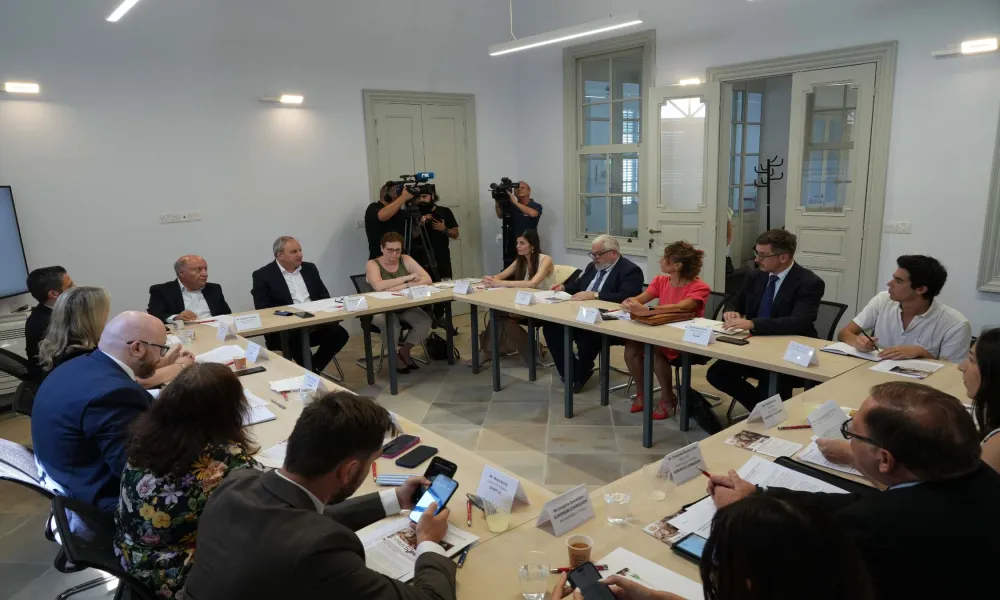
Speaking at a meeting with ambassadors of European Union member states, AKEL secretary-general Stefanos Stefanou said the party supports the efforts of UN Secretary-General António Guterres, who, according to Stefanou, is considering presenting a new outline of positions to serve as a framework for restarting negotiations, similar to the Guterres Framework presented at Crans-Montana.
At the same time, AKEL insists that negotiations should resume from the point at which they broke off in 2017, preserving all convergences already achieved. The party is also calling on the UN to formally record those convergences to prevent renewed disputes over what has and has not been agreed.
A significant part of Stefanou's intervention focused on what he described as "new ideas" circulating in diplomatic circles, which, in AKEL's view, do not facilitate a solution but instead create new areas of disagreement.
The first idea concerns a looser federation, with substantially reduced powers for the federal government and greater authority for the two constituent states. Stefanou argued that this issue has already been addressed in past negotiations and warned that reopening it would generate new disputes rather than bring the two sides closer together.
The second proposal involves changing the system of government from a presidential to a parliamentary model. According to Stefanou, the presidential system was chosen because it better reflects the realities of a bi-communal, bizonal federation and is linked to already agreed mechanisms such as the rotating presidency and the Turkish Cypriot positive vote in the cabinet. Replacing it, he argued, would reopen chapters previously regarded as settled.
AKEL's strongest opposition is directed at a third proposal involving the replacement of the 1960 system of guarantees with a new security framework that would include NATO.
Stefanou described the idea as unacceptable, arguing that it conflicts with the Guterres Framework, which envisages the abolition of guarantees, the end of unilateral intervention rights and the withdrawal of occupation troops.
“AKEL will not support any agreement that provides for NATO involvement,” Stefanou said, adding that “a solution without AKEL's support cannot be sustained.”
The fourth proposal concerns a gradual or evolutionary settlement under which certain key issues would be deferred until after an agreement is reached and addressed during a transitional period of around two years.
AKEL rejects this approach as well, arguing that it would leave important aspects of the Cyprus issue unresolved and could allow new faits accomplis to emerge in the occupied areas. According to the party, such a model risks entrenching partition rather than promoting reunification.
Addressing the EU diplomatic missions, Stefanou argued that the only secure basis for a meaningful resumption of negotiations is preserving the convergences achieved so far and completing discussions on the remaining issues.
He also advocated a specific roadmap that would make use of EU-Turkey relations and energy cooperation as incentives for reaching a comprehensive settlement.