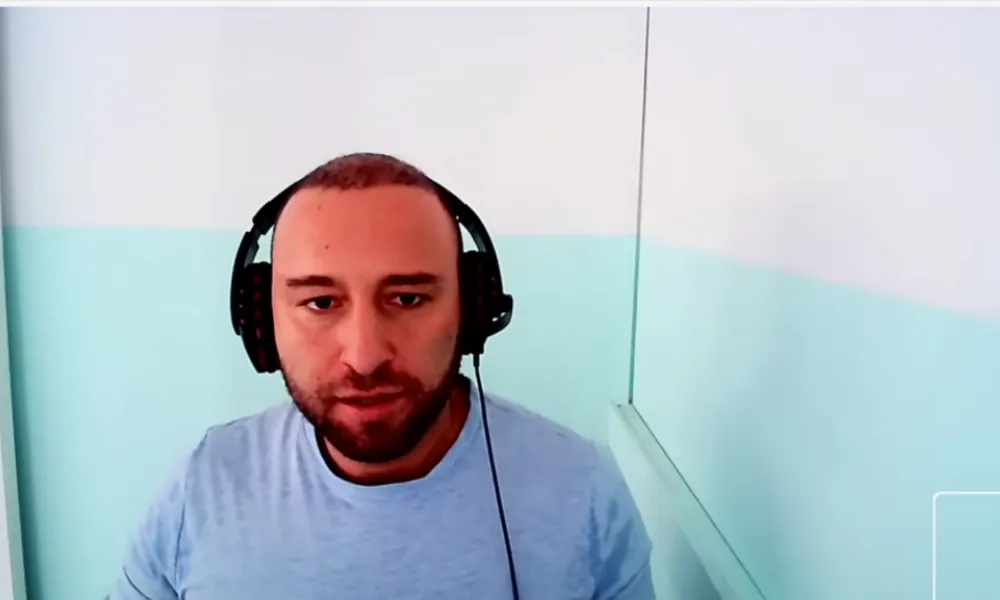

A podcast appearance by Turkish inmate Taner Tolga Tarlacı from the Central Prisons has prompted criticism after footage circulated in Turkish and Turkish Cypriot media. The Justice Ministry said the video call itself was authorised under standard prisoner communication procedures, but not as a media interview.
Tarlacı gave the interview in mid-August to Turkish Cypriot YouTuber Cenk Hoca.
He is widely known in Turkey following his participation in the popular reality television programme Survivor Turkey.
Tarlacı is serving a prison sentence after being convicted by Famagusta District Court of serious criminal offences. He was found guilty of rape, the most serious charge against him, as well as robbery, unlawful detention and causing bodily harm.
Claims made during the interview
During the interview, Tarlacı claimed that his conviction resulted from racist treatment by the court.
He also alleged that he was not permitted to present his own evidence during the proceedings, which he said affected the outcome of the case.
Tarlacı made several other claims, including that he had spoken by telephone with entrepreneur Elon Musk, Donald Trump and Turkish President Recep Tayyip Erdoğan, from whom he allegedly sought help to secure his release.
Justice Ministry explains how the call was approved
Following the video’s publication, the Justice Ministry issued a statement titled “Clarifications on a prisoner’s online communication”.
The ministry said communication with the outside world is a recognised right for prisoners. Under the established procedure, inmates may make two online calls each month through the prison’s official Microsoft Teams system.
It said this option is particularly important for foreign prisoners whose relatives live abroad and cannot visit them.
The ministry confirmed that the call was authorised and took place in a designated area under the supervision of a staff member.
It also stressed that Tarlacı neither possessed nor used a mobile phone and did not have unrestricted internet access.
The approval covered communication with a declared individual abroad, not a journalistic interview. According to the ministry, the recording appears to have been made by the person outside the prison without the Prison Department’s knowledge or approval.
The Prison Department is now reviewing its existing procedures to determine whether further safeguards are needed.