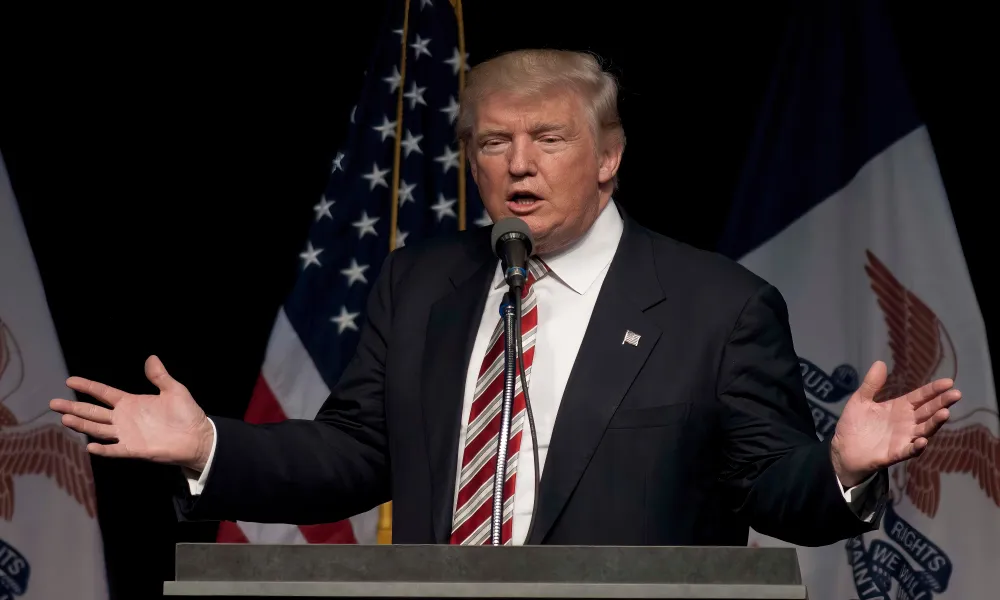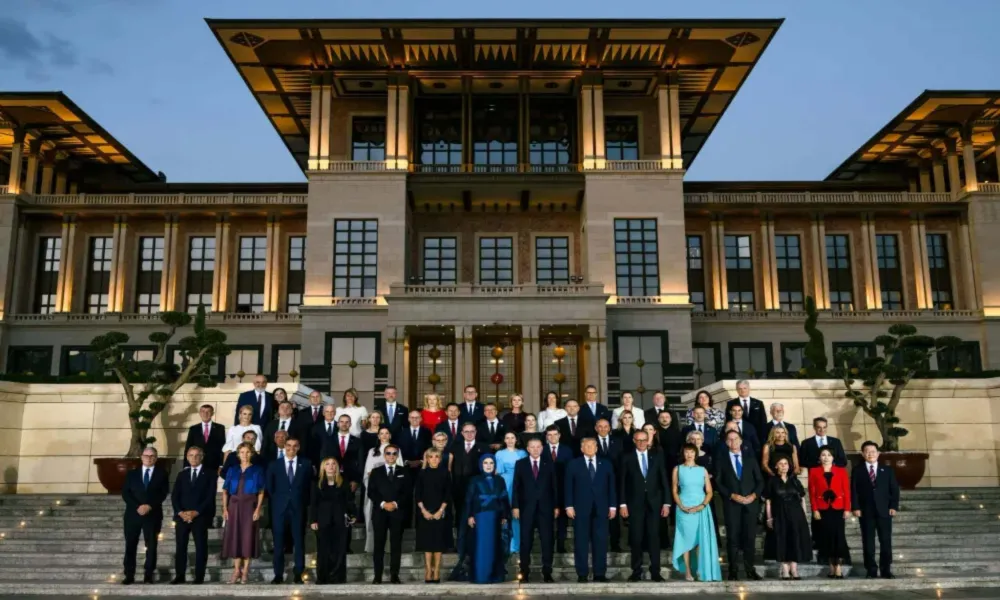

The NATO summit in Ankara was intended to showcase allied progress on defence spending and continued support for Ukraine. Instead, President Donald Trump's decision to launch a new wave of airstrikes against Iran on Tuesday night, while also revoking a licence allowing Tehran to sell oil on international markets, dramatically changed the tone of the gathering.
The strikes were carried out in response to attacks on three commercial vessels in the Strait of Hormuz, underscoring the fragile nature of the temporary arrangement that had been aimed at ending hostilities between Washington and Tehran.
Trump reportedly authorised the operation shortly after leaving a dinner hosted by Turkish President Recep Tayyip Erdoğan for the leaders of NATO's 32 member states ahead of Wednesday's main summit session, which was focused on allied defence spending commitments.
Concern among European allies
The US president did not publicly address the strikes on Tuesday night. It is relatively rare for a US president to authorise military action while outside the United States. A comparable case occurred in 2011, when then-president Barack Obama approved military strikes in Libya during a visit to Brazil.
European governments and Canada arrived at the summit concerned that Trump might once again criticise allies over their stance during the US-Israeli conflict with Iran, a conflict they say they were neither consulted about nor asked to support beforehand.
Trump had previously demanded "loyalty" from allies and described NATO as a "paper tiger" after some countries declined to allow unrestricted use of their military bases for operations against Iran.
Meeting Erdoğan on Tuesday, he argued that he had effectively been testing the reliability of Washington's allies.
“Italy turned us down, Germany turned us down and France turned us down. And that's okay. But why are we spending hundreds of billions of dollars when they're not there for us?” Trump said.
Allies seek to demonstrate increased defence spending
NATO summits are traditionally designed to project unity and deterrence at a time when Russia continues its war in Ukraine and concerns persist that other European countries could eventually come under threat.
In an effort to ease tensions with Trump, NATO Secretary-General Mark Rutte travelled to Washington last month promoting what he called the "Trump Trillion", referring to the estimated $1.2 trillion in additional defence spending committed by European allies and Canada since 2017.
With the summit under way in Ankara, Rutte highlighted a series of new defence procurement agreements that will be financed through those commitments, much of the spending expected to benefit American defence manufacturers and support jobs in the United States.
However, Trump's comments following his arrival in Turkey suggested allies could once again face sharp criticism despite their efforts.
Greenland issue returns
Shortly before the summit began, Trump also revived his calls for the United States to acquire Greenland, arguing that Washington should gain control of the semi-autonomous Danish territory.
The position runs contrary to NATO's core principle that member states are committed to defending one another's territorial integrity rather than challenging it.
Pressure for even higher defence spending
Trump has consistently argued that the United States bears a disproportionate share of the alliance's defence burden.
At the previous summit, NATO members agreed to work towards spending 5 per cent of GDP on defence, including 3.5 per cent on core military expenditure and 1.5 per cent on supporting infrastructure such as roads, bridges and ports to facilitate rapid military deployments.
Rutte has called on all member states to present "clear, specific and credible plans" for meeting those targets.
Latest NATO data show that Slovenia, Belgium, Spain and the Czech Republic are still struggling to meet even the alliance's previous target of spending 2 per cent of GDP on defence.
The Trump administration is also pushing for what it describes as a more flexible and efficient NATO, under which European countries would assume primary responsibility for the continent's conventional defence, including support for Ukraine, while the United States continues to provide its nuclear deterrent.
European allies, however, are still waiting for clarity regarding the scale of any planned reduction in the US military presence in Europe.
The Pentagon has already launched a six-month review of that presence, with the extent of any withdrawal expected to depend on European defence spending increases and the availability of allied military facilities.
Zelenskyy renews NATO membership call
Ukrainian President Volodymyr Zelenskyy used the summit to renew calls for Ukraine to join NATO, arguing that Ukraine's armed forces possess valuable battlefield experience and could significantly strengthen the alliance's military capabilities.
Zelenskyy, who is expected to meet Trump on the sidelines of the summit, said Ukrainian forces have demonstrated their ability to strike targets deep inside Russian territory, including oil refineries and energy infrastructure.
He also claimed that Ukrainian forces neutralise an average of 30,000 Russian troops per month.
Meanwhile, several countries in Northern, Central and Eastern Europe have expressed growing concern that Russia may be preparing hybrid attacks against European states, combining conventional military pressure with cyberattacks and other forms of disruption as President Vladimir Putin continues to pursue his objectives in Ukraine.
Trump to meet Syrian president
On the margins of the summit, Trump is also expected to meet Syrian President Ahmad al-Sharaa, the former leader of the armed group that overthrew Bashar al-Assad in December 2024.
Despite his past links to al-Qaeda, al-Sharaa has secured support from the US president as he seeks to rebuild Syria's relations with Western countries and advance reconstruction efforts.
Trump has repeatedly suggested that the Syrian president could deal more effectively with Hezbollah in Lebanon than the Israeli military, remarks that have caused concern in both Lebanon and Israel.
Al-Sharaa, however, has made clear that he has no intention of taking on such a role.