
The United States and Iran entered a new and particularly dangerous phase of confrontation following a second wave of American strikes targeting around 100 sites across Iran and extensive Iranian retaliation against US military bases in five Middle Eastern countries, while Pakistan continues efforts to bring the two sides back to the negotiating table.
Second wave of strikes
The US Central Command (CENTCOM) announced that it had struck targets linked to the Islamic Revolutionary Guard Corps, including:
- Air-defence installations
- Radar systems
- Naval infrastructure
- Mine-laying capabilities
- Communications facilities
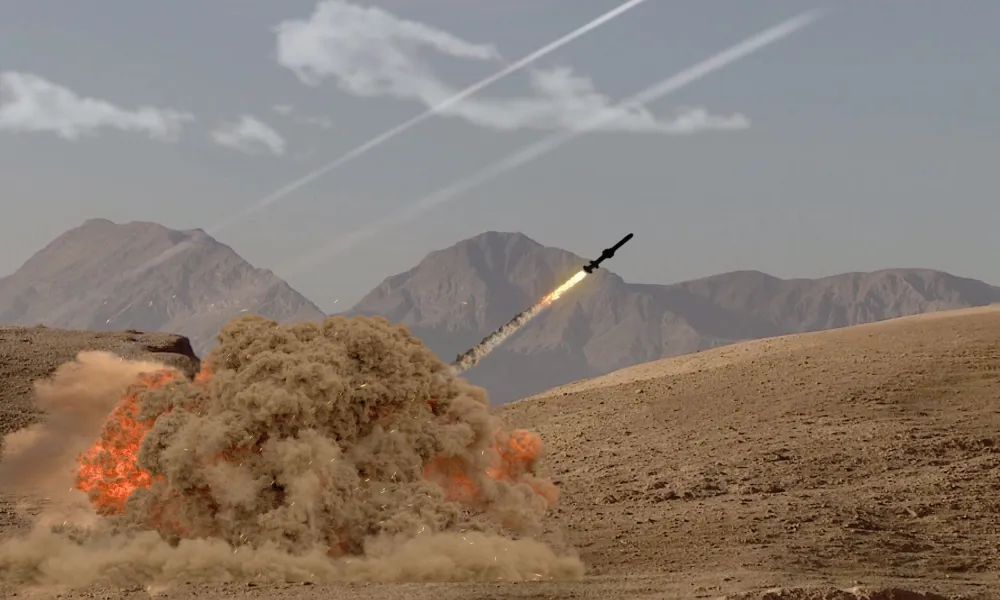
In response, Iran launched missiles and drones against US military bases in:
- Jordan
- Iraq
- Bahrain
- Kuwait
- United Arab Emirates
The Jordanian military said it intercepted 10 ballistic missiles, while three others landed in uninhabited areas without causing injuries.
Kuwait confirmed it had come under attack, while air-raid sirens sounded in Bahrain.
Iranian military spokesman Ebrahim Zolfaqari warned of:
"Greater and more destructive retaliation"
if US attacks continue.
Trump: "I couldn't care less"
Donald Trump dismissed an ABC News report suggesting he was seeking negotiations, describing it as "fake news", and declared that he was unconcerned whether Tehran signed what he described as a worthless agreement.
"I couldn't care less if they sign a deal that is worth nothing to them," he said.
Trump also warned that if Iran responded to the strikes it would be:
"Hit again, much harder."
He went on to accuse Iran of delaying the inevitable and questioned:
"When will the Iranian people rise up and fight"
against the regime.
US Treasury Secretary Scott Bessent argued that Tehran now faces three options:
- A Revolutionary Guard coup.
- A popular uprising.
- A return to negotiations.
Bessent also dismissed reports of naval mines in the Strait of Hormuz, describing them as:
"Iranian propaganda."
Pakistan's mediation effort
Despite the escalation, Pakistan continues diplomatic efforts to ease tensions.
Prime Minister Shehbaz Sharif met Iranian President Masoud Pezeshkian on the sidelines of a Shanghai Cooperation Organisation summit in Bishkek.
At the same time, Pakistani Foreign Minister Ishaq Dar held talks with his Iranian counterpart Abbas Araghchi.
Pakistan's army chief, Field Marshal Asim Munir, visited Tehran last week for discussions on de-escalation and the reopening of the Strait of Hormuz.
Pezeshkian reiterated that Iran remains prepared to return to implementation of the memorandum of understanding agreed last June.
Civilian deaths fuel tensions
The latest escalation comes only days after a US strike on a wedding ceremony in the southern Iranian city of Kuhestak reportedly killed four civilians, including a child.
The incident prompted a strong reaction from Iranian Parliament Speaker Mohammad Bagher Ghalibaf, who described the United States as:
"Satan."
A CENTCOM spokesperson responded by stating that:
"The US military never deliberately targets civilians."