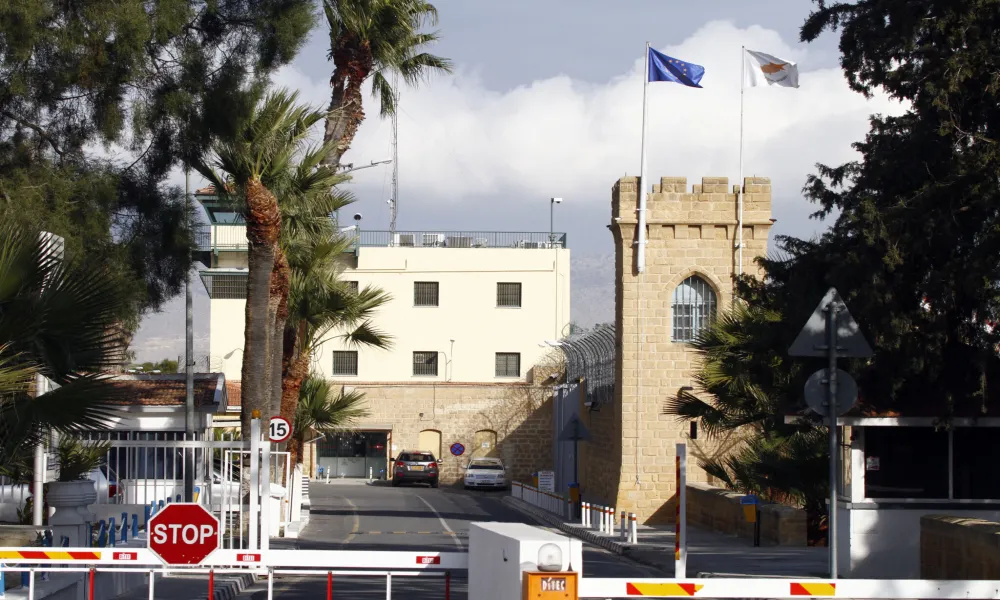

The case of the Central Prisons documents found in April 2024 at the home of a senior prison guard in Nicosia is proving to be one with a great deal more to it. The 58-page interim ruling of the Nicosia Criminal Court gives a clear indication of the seriousness of the case and of the content of the documents, some of which touch on matters of national security. The ruling examined an application by the defence over the prosecution's refusal to hand the defendants copies of part of the evidence. This included documents given to the defence as copies with certain details redacted, as well as documents and electronic files of which no copies were provided. The court ruled that the prosecution's refusal to hand over the disputed material was justified, having examined it separately for each category on the basis of its specific content. Beyond that conclusion, the ruling reveals significant details about documents that were found almost by chance and concern matters of major importance. The documents were discovered at the prison guard's home during a police search in connection with a separate case under investigation against him.
What the 392 documents contain
The ruling analyses, as far as is possible at this stage of the proceedings, the 392 documents that were not given to the lawyers of the eight defendants, who are allowed only to inspect them and take notes, without photographing them. Among other things, the documents include correspondence on the Prisons Department's action and evacuation plans in an emergency, and on the witness protection programme involving the police, the Law Office of the Republic and the Prisons Department, along with minutes of meetings chaired by the Attorney General on measures for safe custody. They also include correspondence on the execution of arrest warrants issued by the British Bases against Cypriots living in the Republic of Cyprus, and minutes and reports on the operation and security of the Central Prisons, the protective measures taken, the security systems and their weaknesses.
The material further includes confidential instructions and orders on heightened security at the Central Prisons, prisoner escorts and staff duties, as well as confidential correspondence between the police and the Prisons Department on the operation of systems used by the police. There is correspondence between the two on information about illegal or criminal activity, possible escapes, witness tampering and threats, correspondence between the Prisons Department and the Law Office concerning a specific prisoner, and correspondence on attacks, malicious acts or threats against prison guards and the measures taken to protect them. Other documents concern prison guards' firearms licences, Audit Office reports containing information on the Prisons Department's security systems and their weaknesses, and the state of the Central Prisons' weaponry. The material also includes confidential correspondence on cooperation between the prisons and the police in investigating criminal offences and executing search warrants inside the prisons, a secret incident report and administrative investigation material concerning a specific police officer, and civil emergency planning documents on risks, external threats, Republic of Cyprus action plans and the evacuation of the Central Prisons.
The ruling describes the content of the documents only in outline, to the extent needed to justify, in the court's judgment, the decision not to give copies to the defence lawyers. The key points by category are set out below.
Prison plans
The court found that the material consists of electrical, topographical, architectural and other plans and floor plans of the Central Prisons, along with contract terms covering technical specifications and related letters. "These documents, among other things, record information on the layout, facilities and infrastructure of the Central Prisons," the ruling states. "The handing over and possession of copies of this material, with the consequent possibility of further copying and dissemination, is capable of creating a real risk to the security of the correctional institution. Protecting the security of the prisons constitutes an important public interest."
National security and emergency planning
In the civil emergency planning material, which concerns risks and external threats, Republic of Cyprus action plans and the evacuation of the Central Prisons, the prosecution invoked section 7(4) of Cap. 155, which concerns the risk of serious harm to the national security of the Republic. According to the ruling, the documents record details of civil emergency planning exercises code-named "Kronos", evacuation plans in the event of war or another emergency, material on national planning to deal with terrorist threats or drone attacks, and material on the implementation of an agreement with the United Kingdom on non-military deployments at the Bases, in which security and national planning issues are discussed. "From examining the documents themselves, we find that their content is not limited to these general headings, but includes more specific information on assessed risks, planned responses, measures and actions by the competent authorities," the court said.
A separate set of material includes versions and sections of the prison evacuation plans, their annexes and related correspondence on their approval, revision and updating. The court found that this goes beyond the general knowledge that emergency plans exist and sets out specific organisational and operational arrangements, including activation stages, the chain of command, the allocation of responsibilities, the sequence of planned actions, communication, movement and evacuation procedures, the deployment of staff, resources and equipment and the coordination of the services involved.
Prison guards' weapons
The material on firearms concerns specific applications by prison guards to carry weapons. It includes their identifying details, the personal security reasons cited in support of the applications, and official assessments of the risks they may face and how these relate to their duties. It also includes information on specific weapons, the validity of a specific firearms licence, the details requested for its review and personal information placed before the competent authority when an application was examined.
Criminal activity and threats
These documents concern information on illegal or criminal activity, possible escapes, witness tampering, threats or other criminal acts against specific people, as well as attacks or threats against prison guards and the measures taken to protect them. The prosecution argued that withholding them protected an important public interest in the effective prevention and investigation of crime, the secure exchange of information between the police and the Prisons Department and, in the case of prison guards, preventing them from being targeted or intimidated. The court said its judgment did not rest on the mere mention of criminal activity or threats, but on whether the specific content could reveal how the authorities act or respond, expose people under threat or undermine specific prevention or protection measures. It found that part of the material contains information from which informants, people allegedly targeted by threats or planned actions and staff members given specific protection could be identified. The documents also contain information on times, places, movements, methods of operation and response measures, and in much of the correspondence, official instructions or records of action taken or planned in response to information received by the authorities.
Weaknesses in security systems
The court found that these documents are not limited to general references to security. They contain specific information on security systems, their installation and operation, their capabilities and identified weaknesses, including weaknesses in the Prisons Department's electronic facilities, as well as official assessments or actions to address them. "The material therefore reveals not only the existence of security measures or systems, but non-public information on mobile phone jamming and electronic surveillance systems, their operation and malfunctions, as well as other electronic facilities of the Prisons Department, and actions taken or planned to deal with specific problems," the ruling states. Handing over copies, it said, "could facilitate the identification and exploitation of specific weaknesses and points of vulnerability and, by extension, reduce the effectiveness of security measures".
Protected witnesses
The material on witness protection includes information on the places and conditions of protection or detention, the movements of protected people, individual risk and threat assessments, and the manner, timing and conditions under which specific protection measures were applied, along with their identified weaknesses. The court found that giving the defence copies of this material could make it easier to locate protected people, predict their movements, identify weak points in their protection or circumvent specific security measures. "The risk is not hypothetical. It arises from the very content of the documents and from the possibility of putting the information they contain to practical use," the ruling states.
Allegations against police officers
The withheld documents also include secret incident reports concerning a complaint against a specific police officer. The court found that these are essentially identical in substance and are not correspondence between a sender and a recipient, but a record of information received by the Central Prisons management about a specific police officer and his alleged contacts with a specific prisoner. The material identifies the people involved and includes details of the timing and method of communication, extracts of messages, and information and allegations about actions attributed to the officer and others. According to the ruling, it records information about the systematic approach of prisoners and the alleged offer of inducements in connection with criminal cases concerning them, about obtaining or creating audiovisual material from inside the prisons, and allegations of actions aimed at creating incriminating material against members of the prisons' management. The ruling states that the material also includes information on the possible involvement of another police officer in illegal activities inside the prisons, involving the offer of money or other inducements.
The risk of dissemination
The court also addressed the risk that the disputed documents could be disseminated. "We clarify that the risk of dissemination is assessed objectively and does not rest on an assumption that the defendants or their lawyers will make improper use of the material," it said. "Possession of a copy differs in practice from inspection, because it allows faithful, immediate and multiple reproduction."