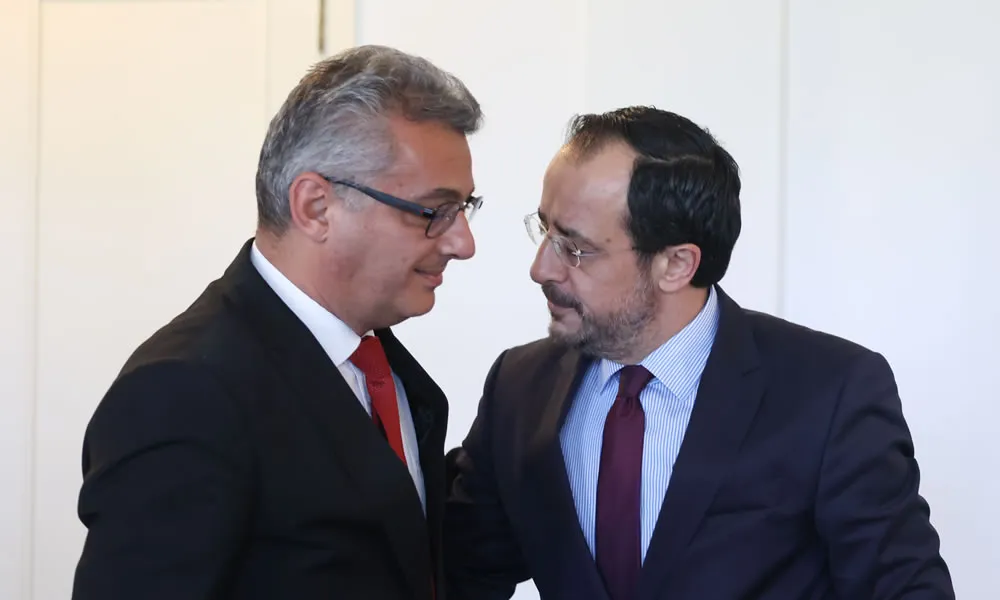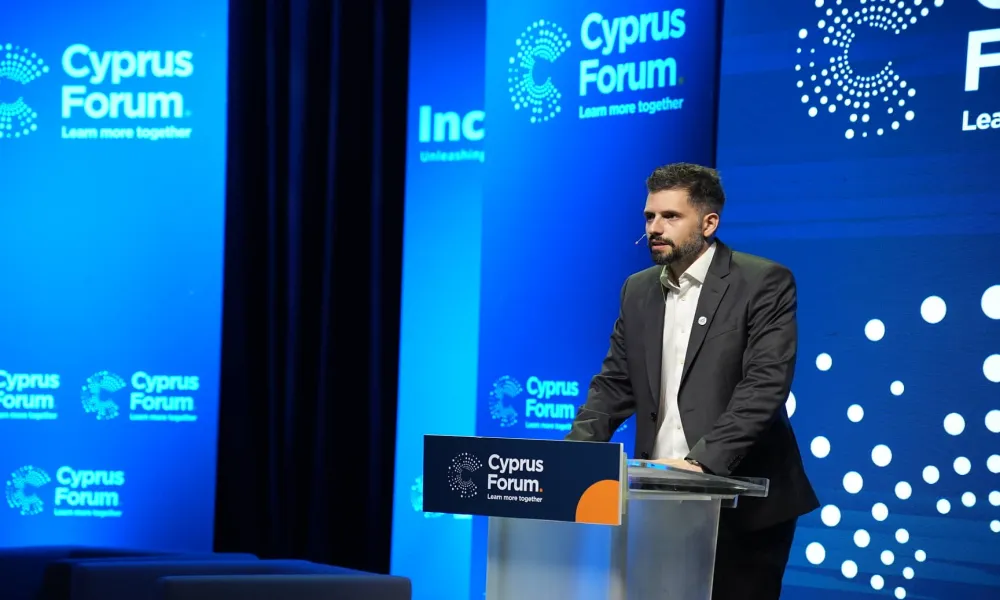

Cyprus Forum will not change its approach to bringing the two communities together, its executive chairman Nicolas Kyriakides told Politis, after a row over titles led to the withdrawal of Nicosia Mayor Charalambos Prountzos and Mehmet Harmancı, the Turkish Cypriot 'mayor' of Nicosia, from this year's event. The forum takes place in Nicosia from 28 to 30 September. "Cyprus Forum was created to bring to the same table people who rarely sit together and to open up issues that others avoid, at every level and not only bicommunal ones," Kyriakides said. "That is what we have done all these years, even when we came under attack, and that is what we will continue to do." What will change, he said, is how the forum handles such issues. "Our mistake this year was that we did not agree in advance with both mayors on a mutually acceptable title, as we did in the previous two years. We acknowledged it publicly and apologised." He was clear, however, that the title was not changed because a political party had demanded it. "That party was asking us to withdraw Mr Harmancı's invitation, something we would never do. If we gave in to political pressure, we would not even be organising the forum, which, as I said, does not hesitate to tackle difficult policy issues."
Reactions, he said, were mixed. There was disappointment from people and organisations that share the forum's goals, "and that hurt us more than anything else". Many others from both communities, he said, stood by the forum because they know its work. "The conclusion I draw is that the space for bicommunal dialogue is far more fragile than we think. That is exactly why we must protect it, not abandon it," he said.
Measuring results
Now in its seventh year, Cyprus Forum has established itself as a platform for independent dialogue and policymaking. Asked whether it has achieved its aim, Kyriakides said it has enriched public debate, and has contributed to policymaking, but has not yet reached where it aspires to be. The forum began in 2020 as an annual conference in the middle of the pandemic. Seven years on, a wider ecosystem has taken shape, comprising the main Cyprus Forum, Cyprus Forum Cities and events in Brussels, London and Athens. "We do not claim that a legislative change happened because of a panel. We can say, however, that we have helped create the pressure, networks and alliances that make change easier," he said.
He also acknowledged a weakness. From the outset, the forum committed to tracking results with measurable indicators, but it has not done so with the same consistency every year. The next stage, he said, must be a mechanism for monitoring outcomes, recording which proposal was submitted, which body undertook to examine it, the timeline and what was ultimately implemented. "If a panel is forgotten a week after it ends, it has failed, however senior its speakers were. That must now be our strict unit of measurement," he said.
From strategic position to strategic capability
This year's theme, Kyriakides said, is the shift from strategic position to strategic capability to act. "Cyprus is used to talking about its geographical importance. Geography, however, is not policy, and it is not an advantage in itself," he said. It could even be said to make the country more vulnerable if it is not accompanied by institutional credibility, infrastructure, human capital and stable international relations. That is why the forum takes a broader view of security. "Security is defence, but it is also affordable electricity, water from the tap, data protection, resilient institutions and economic prospects for young people," he said. The agenda links the European economy and the new Multiannual Financial Framework with enlargement, energy interconnection, digital sovereignty, migration and the new geopolitical situation in the region. It also brings the debate home, covering public administration, the rule of law, pensions, housing, citizen participation, young people, people with disabilities and bicommunal cooperation. "The central idea is simple. Cyprus must not only sell geography. It must produce credibility," he said. "And credibility is not built with declarations, but with decisions, people responsible for implementation, timelines and public evaluation."
A digital legislative footprint
Kyriakides said trust in institutions is restored when they work better. "Citizens need proof that the state is willing to be measured, to explain its decisions and to correct its mistakes," he said. The first priority, he said, is a full digital legislative footprint. For every bill, citizens should be able to see who proposed it, what data supports it, which stakeholders were met, which amendments were tabled and how each MP voted. Alongside Cyprus Forum, Oxygen for Democracy also runs Nomoplatform, whose recent MPs' Performance Index Kyriakides described as a first step. The index uses measurable data such as bills proposed, parliamentary questions, issues raised in committees and attendance. "It does not rule on who is a 'good' or 'bad' MP and it does not replace political judgment. It does, however, shed light on activity that until now remained hard to access," he said. Like every index, he added, it must come with open data, a transparent methodology and a right of correction.
A Cyprus that takes part, connects and helps shape decisions
Cyprus Forum has also held themed events abroad in recent years. Kyriakides said the forum sees these as hubs of a Cypriot policy network. "In Brussels, Cyprus must take part in discussions before decisions are taken, not learn about them once the compromises have already been sealed," he said. During the Cyprus Presidency of the Council of the EU, the forum brought together European institutions, think tanks, civil society and business on enlargement, competitiveness, the EU budget, health and social policy. In London, the aim is to turn the diaspora's vast store of knowledge, networks and professional experience into real public value for Cyprus. In Athens, the aim is for the natural closeness between Greece and Cyprus to lead not to obvious and superficial discussions, but to concrete cooperation on foreign policy, technology, the economy and democratic governance. "Small states gain influence when they are well prepared, credible and able to build alliances," he said. "The role of the 'bridge' is empty if ideas, investment, partnerships and peace initiatives do not cross it."
On the under-representation of young people in public debate and the limited depth of bicommunal dialogue, Kyriakides said the forum tried to tackle the issue on two levels, from the design of the agenda to the role participants take on. This year's programme includes separate but linked discussions on democratic education, young people's transition from voting to real influence and the barriers faced by young people with disabilities. The bicommunal strand includes young people and representatives of organisations from both communities, educators from across the island and the experience of the Association for Historical Dialogue and Research's Imagine programme. There is also a discussion on practical forms of cooperation, including in shared services such as health, "and not just another general discussion about a solution to the Cyprus problem". The annual Peace and Democracy Award serves the same purpose, he said: "Peace must acquire faces, examples and institutional continuity." This year's agenda features around 220 speakers, around 50 of them under 35. Around 60% are Greek Cypriot, 5% Turkish Cypriot and 35% from abroad. "Obviously we have not solved the problem," Kyriakides said. "Turkish Cypriot participation is still lower than it should be, while several public debates remain overly dependent on well-known political and business figures."