


All intelligent and democratic people respect the environment. They do not do so because it is fashionable, or because some European directive requires it, but for a much simpler reason. The environment is our very life. It is the water we drink, the air we breathe, the land we farm and the cities in which our children grow up. That is precisely why environmentalism is far too serious a matter to be left to dogmatism.
Activism
Activism is necessary. Without it, many crimes against nature would go unnoticed. Without environmental organisations, journalists and active citizens, we would probably have more unlicensed projects, greater destruction of habitats and even less scrutiny of state decisions. But activism is one thing, and the belief that every road is a disaster, every development suspect, every felled tree a crime and every compromise a betrayal of nature is quite another.
In Cyprus, political ecology was for many years largely identified with the personality of Giorgos Perdikis. He never confined ecology to trees, beaches and rubbish. He linked political ecology directly even to the Cyprus problem, writing that Cyprus is "a single economy, society and ecosystem", while also expressing his well-known reservations about a bizonal, bicommunal federation. That is exactly where the contradiction lies. If there is one issue that should genuinely be treated as an island-wide ecological problem, it is the Cyprus problem. Water does not stop at the crossing points. Fires do not recognise buffer zones. Birds do not show passports. Underground aquifers, erosion, desertification, crops, pollution and climate change concern the whole island. The Republic of Cyprus itself now recognises that the island is particularly vulnerable to climate change, mainly in terms of water, coastal erosion, infrastructure and tourism. That is the bigger picture.
And this is perhaps where the most important difference lies between political ecology and the ecology of everyday denunciation. Charalambos Theopemptou was among those who tried systematically to open up this discussion, on land use, water, waste, energy, air quality, sustainable transport and the climate crisis. In other words, ecology as public policy, and not simply as a reaction against a solution to the Cyprus problem or against the next tree to be cut down.
Kyriakou Matsi Avenue
The case of Kyriakou Matsi Avenue is very telling. When its redevelopment began, tension arose over the trees. Yet according to Nicosia Municipality itself, a key provision of the project was to save as many existing trees as possible, while around 90 new mature trees were planted. At the same time, the project delivered new pavements, crossings, facilities for people with disabilities, bus stops, underground utilities and an overall upgrade of the road. Had the logic prevailed that not a single trunk could be touched, the redevelopment would have been practically impossible. This is the heart of the matter: ecology cannot mean standing still.
The same applies to Akamas. Obviously Akamas must be protected. And obviously there were serious reasons why environmental organisations reacted to specific works. Official documents refer to complaints about road widening, landfilling and works that raised questions over compliance with the required environmental procedures. Unfortunately, these became the pretext for a new, long period of inaction, which in practice instils in the average Cypriot citizen the mistaken belief that a protected area must necessarily mean a rough road, minimal access and an absence of basic organised facilities, because this keeps a vast distance in place.
A properly organised road is not by definition an enemy of nature. An organised rest area with water, toilets, bins and supervision can protect a landscape better than an uncontrolled situation in which anyone can drive wherever they like, park wherever they find a spot and leave their rubbish behind. Protection does not mean abandonment.
We want green energy, but where?
The debate over renewable energy is even more interesting. We all call for a green transition. Yet when the time comes to site solar panels or wind turbines, new objections erupt. The Ecologists, for example, opposed large solar projects, citing environmental impacts and the loss of agricultural land, and arguing that solar panels should be installed on rooftops as a priority. In specific cases, the objections may be well founded. A solar park that destroys a forest does not automatically become ecological because it produces clean energy. But at some point we must also answer the next question: where exactly do we want green energy to be produced?
We cannot say no to fossil fuels, no to solar panels in the countryside, no to wind turbines near communities and no to transmission grids, and then wonder why the energy transition is delayed. The solution is not to abolish environmental controls. It is serious spatial planning, so that society knows in advance where such projects can and cannot go.
Ambelopoulia and partridges
There is similar confusion over hunting. In Cyprus, trapping so-called ambelopoulia, the small songbirds traditionally caught and eaten as a delicacy, is illegal, while other species have legal hunting seasons and specific bag limits. For partridge and francolin, for example, limits are set per hunter, while turtle dove hunting is subject to an overall bag limit. Scientifically, of course, there are reasons for treating species differently. Politically, however, there is a problem when the rules are presented to society as moral axioms instead of being explained with data on the population, reproduction and conservation of each species. Ecology needs science, not religious faith. Above all, it needs proportionality.
A modern state cannot treat development as a threat by definition, nor can it treat the environment as an irritating obstacle to be swept aside as soon as an investor appears. The problem begins when politics turns into a contest of absolute certainties. When identity, security and the national question are presented through simplistic slogans on one side, and ecology is turned into an endless list of prohibitions on the other, society does not gain solutions. It gains camps. It is precisely here that different forms of political maximalism meet, despite their huge ideological differences. The answer to the hardline nationalist approaches expressed in the public sphere, including by Elam, cannot be an equally absolute "green" discourse. One political identity is not neutralised by constructing its opposite.
Ecology must measure results
Cyprus needs an ecology that measures results. More trees, but also better roads. A protected Akamas, but also organised access. More renewables, but properly sited. Protection for birds, but with rules grounded in science. Protection for the coastline, but without treating every human activity as hostile to nature.
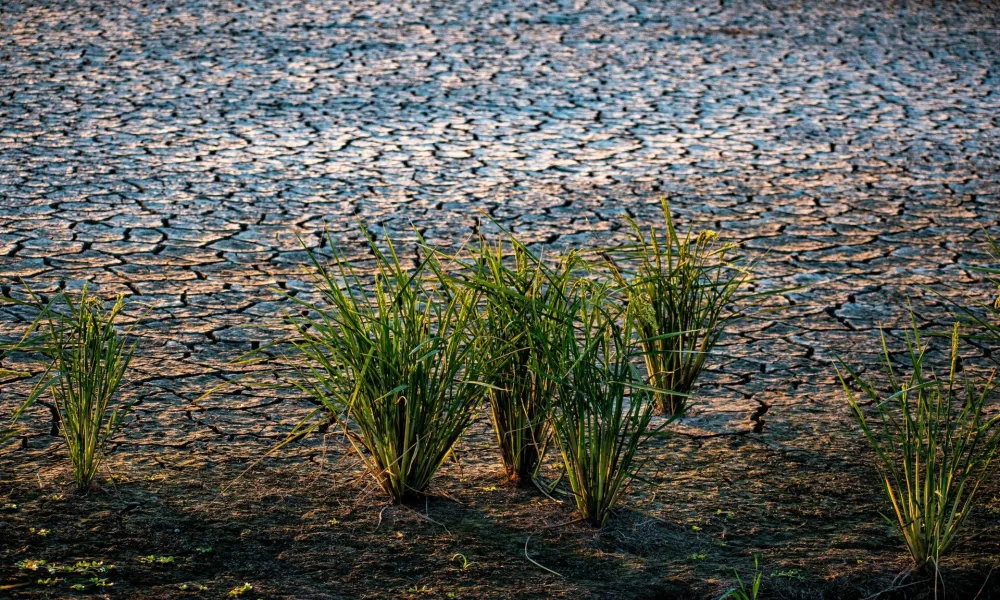
Above all, we need to understand that Cyprus' biggest ecological problem is not a tree felled on an avenue. It is a small, dry island, growing hotter year by year, politically divided but ecologically one, which still plans its water, energy, cities, transport and land use as if it were five different countries. If political ecology wants to be truly useful, that is where its great battle lies.