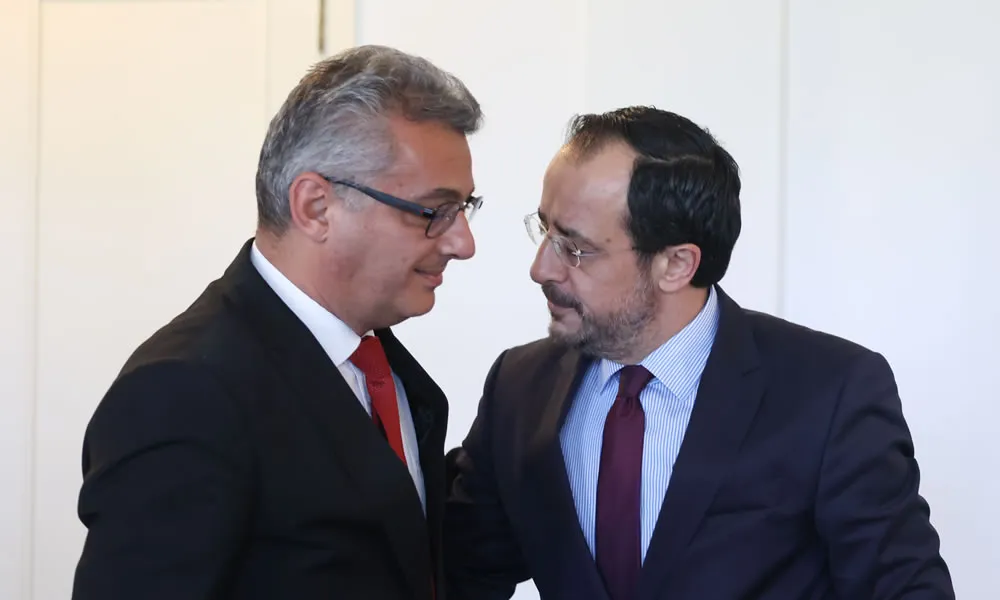

Last Sunday, I posed a simple question in this column: why now? Why did Nikos Christodoulides wait until his last meeting with Tufan Erhürman before New York to table 19 points on substance, methodology and confidence-building measures? By his own account, they had been preceded by 11 meetings between the leaders and 16 between the negotiators. What prevented these points from being tabled in good time, worked on and negotiated? The question remains. And it grows heavier as the expectation of a result is replaced by yet another deadline for waiting.
On Thursday, after his meeting with Guterres, the President expressed satisfaction with how his ideas had been received, avoided making them public and advised us: "Let us give diplomacy space." Of course. Diplomacy needs space, discretion and time. Above all, however, it needs something to negotiate and a willingness to decide. Otherwise, space becomes a refuge from accountability, and time becomes a means of exhausting the last remaining hope.
We do not know the content of the 19 points, so we cannot conclude that each of them is an obstacle. We can, however, judge the method. Proposals acquire political value when they produce convergences. A favourable hearing from the Secretary-General is not the same as agreement from the other side. Nor is the President's personal satisfaction a national result. Which difference was bridged? Which open issue was closed? Which decision brought the resumption of talks any closer?
This is where the essence of presidential responsibility lies. Guterres can facilitate, propose and convene. He cannot manufacture the political will that is missing from the table. When Nicosia arrives with new packages without demonstrating sufficient common ground, it narrows the very space in which the mediator can move. It then calls on society to expect from him the breakthrough that the political leadership itself avoids. Society has the right to know what the specific goal is, what the next step is and by what criteria the outcome of this new effort will be judged.
This constant postponement has deep historical roots. Makarios' "long-term struggle", associated with the strategic thinking of Michalis Dountas, survived as a political mindset: we endure, we wait and we safeguard our positions until conditions change. Except that conditions also change against us. The occupation acquires infrastructure, separate lives acquire normality, and reunification has fewer and fewer people who remember it as a lived experience. Time is at work, and its bill is not suspended because we announce initiatives.
A leader is judged by the best he can secure within the real circumstances. George Vassiliou did not solve the Cyprus problem. He did, however, leave behind the Ghali Set of Ideas and the 1992 map as a concrete point of reference for a comprehensive settlement. In my judgment, it was one of the most important opportunities we ever had. The later slide into discussing piecemeal measures shows how easily managing the stalemate takes the place of a solution.
The year 2017 was another such crossroads. At Crans-Montana, convergences had been gathered, along with a framework for dealing comprehensively with the critical outstanding issues. The conference failed. My political assessment of Nicos Anastasiades remains harsh. He did not turn that prospect into an agreement, nor did he secure a continuity worthy of what had been achieved. His successor must be judged on whether he makes use of that material. So far, the constant announcement of a restart has carried more weight than the restart itself.
The analogy with the Middle East concerns precisely the responsibility of choice. Yitzhak Rabin, with his military background, recognised the need for a political agreement and became associated with Oslo. Benjamin Netanyahu opposed that course. Their different choices raise a question that goes beyond Israel. Who serves a country's security in the long run: the leader who takes on the cost of compromise, or the one who invests in endless conflict?
The two cases have different histories and different frameworks for a solution. In Cyprus, we seek reunification through a bizonal, bicommunal federation with political equality. The common lesson concerns the ability of leaders to turn international support into a viable agreement. Peace requires security, rights and prospects for all. It also requires politicians who explain the price of standing still to citizens with the same persistence with which they describe the dangers of compromise.
For Cyprus, there is also the European dimension. The EU can support an agreed solution institutionally and financially, strengthen its implementation and offer both communities a common horizon. But this requires a Cypriot initiative with a clear direction, one that makes use of the convergences, engages seriously with the Guterres framework and prepares society for the decisions ahead. As long as the leadership keeps searching for new starting points, it moves further away from the difficult choices already in front of it.
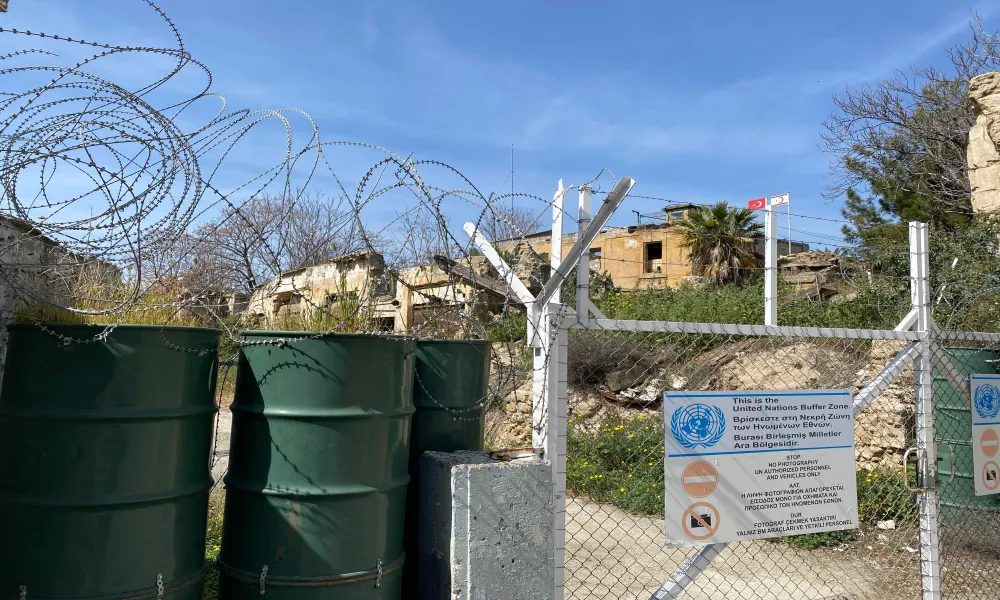
Turkey bears decisive responsibility for the occupation and its perpetuation. That responsibility makes a credible policy of our own all the more urgent. Every lost opportunity limits what we will be able to claim tomorrow. Every year without a solution widens the distance between the communities and entrenches the facts on the ground.
Nikos Christodoulides thus risks going down in history as the last general of partition, the President who, while proclaiming reunification, allows the political time for it to run out. This judgment concerns the outcome of his policy and the weight of the responsibility he took on. Nineteen ideas are not enough to answer it. What is needed is a decision that changes the country's course. Otherwise, behind every call to wait, partition will gain another day.