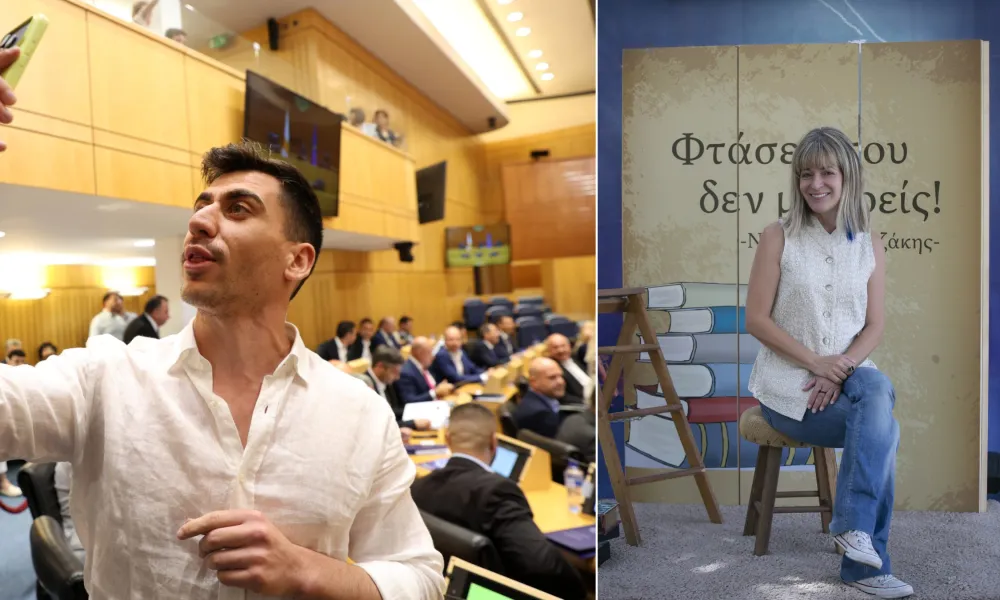

The Commissioner for the Protection of Children's Rights, Elena Perikleous, has expressed "serious concern" over the participation of children in a campaign on electricity prices promoted by Fidias Panayiotou, while the Direct Democracy movement is expected to issue an official response.
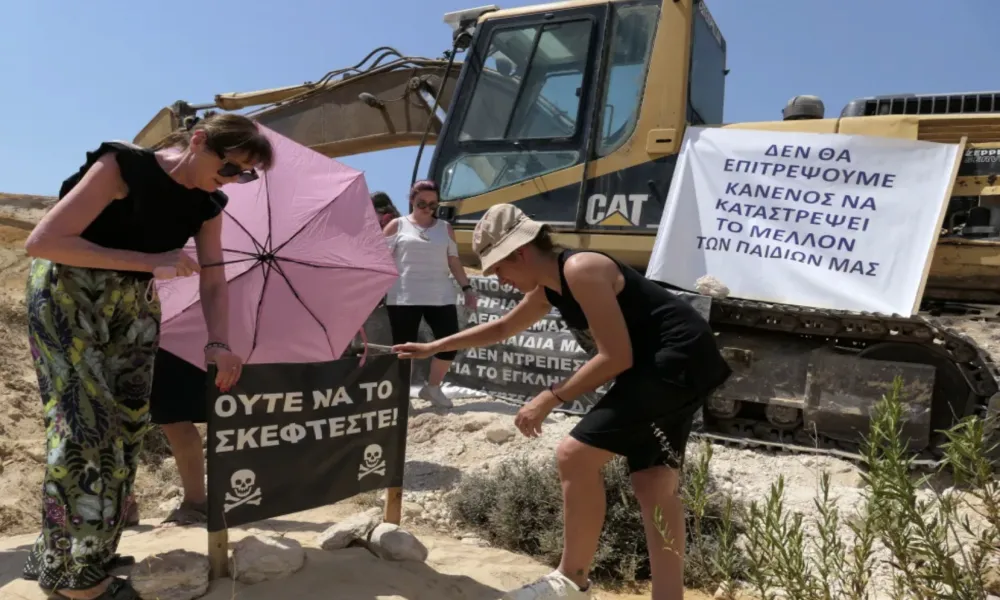
Panayiotou recently published videos on social media featuring children calling for lower electricity prices as part of a campaign that is due to culminate in a protest march organised by Direct Democracy on 17 November, from Eleftheria Square to the Presidential Palace.
The campaign prompted Perikleous to send a letter expressing concern about the way children's participation in the public intervention had been secured.
While the Commissioner's statement was published on Monday afternoon, the issue had not been formally discussed within Direct Democracy by Tuesday morning. However, party members are aware of the matter and are expected to discuss it during the day before issuing a statement.
A wider issue of children's rights
Perikleous said she considered it important to comment publicly because the issue extends beyond this particular case.
According to the Commissioner, it raises a broader and particularly significant children's rights issue: how adults understand and safeguard meaningful participation by children in public life.
Participation is a right
In her statement, Perikleous stressed that children's participation is a right and should not be turned into a tool for advancing the aims or objectives of adults.
“For this reason, whenever children participate in public interventions or social mobilisations, we must ensure that they have been properly informed beforehand, that they understand the issue on which they are being asked to express a view, that their participation is voluntary and that they are expressing their own opinion rather than a message formulated by adults,” she wrote.
The Commissioner stressed that children have a voice and that the voice belongs to them.
She said children have the right to:
- be informed,
- ask questions,
- challenge ideas,
- seek explanations,
- form opinions,
- advocate change,
- care about what happens around them,
- hold views about the society in which they are growing up,
- defend both their own rights and those of others,
- participate in public life,
- and take part peacefully in demonstrations on issues that affect them.
Participation versus ‘instrumentalisation’
Perikleous drew a distinction between children's participation and what she described as their mobilisation or instrumentalisation by adults.
“One thing is children's participation and another is their mobilisation and/or instrumentalisation by adults,” she said.
“The use of children as a means of strengthening a political position or a public mobilisation does not constitute participation.”
She added that when the influence an adult may exercise over a child is used to guide the child's opinion or choices, it may amount to manipulation.
According to the Commissioner, children cannot become a means of achieving goals set by others, nor should their voices be used to amplify the voices of adults.
“Adults do not speak through children. They create the space necessary for children to become informed, form opinions, exchange views, create and make suggestions,” she said.
Meaningful participation
The Commissioner argued that participation only has value when it is genuine.
That means a child must have appropriate information, room to reflect, the freedom to agree or disagree and the ability to decide whether to participate.
“The decision must be their own,” she said.
Perikleous added that society must protect children from all forms of instrumentalisation without depriving them of the right to hold views, make choices and participate.
The same principle applies in the digital environment, she noted.
“The child's right to participate cannot become the adult's right to mobilise them for their own purposes,” she said.
Concluding her statement, the Commissioner wrote:
“Children have the right to play an active role in public life. Participation does not mean ‘come with me’. It means: ‘Become informed. Think. Decide. Express your own opinion.’ This is the type of participation we owe children. And this is the participation we must seek and protect.”