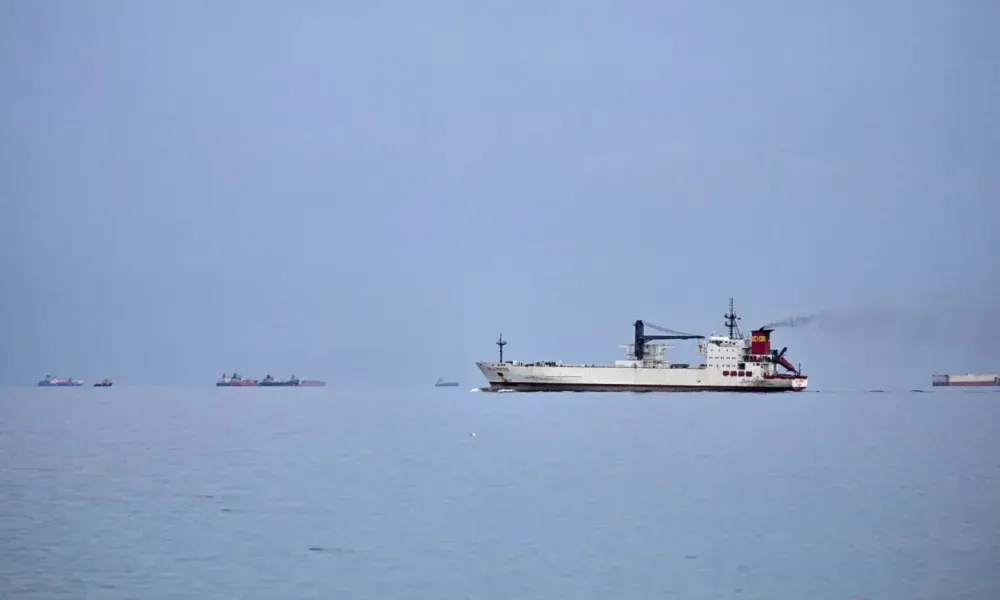

Shipping through the Strait of Hormuz slowed sharply over the weekend following attacks on tankers, Reuters reported on Monday, citing shiptracking data, while talks between the United States and Iran aimed at resolving the conflict in the Middle East remained stalled.
Data from the shiptracking firm Kpler, cited by Reuters, showed five commodity vessels transited the strait on Saturday, with none recorded on Sunday, compared with 31 transits over the previous weekend. The vessels that entered on Saturday included an empty very large crude carrier with its tracking system switched off, and an Indian-flagged very large gas carrier that used the Iranian route, Reuters reported. A small tanker carrying Iranian fuel oil exited the strait, the data showed.
Traffic through Hormuz appeared to grind to a near standstill after the United Arab Emirates said three vessels operated by the Abu Dhabi National Oil Company came under attack while transiting the strait last week, according to Reuters. Washington has said it could maintain a naval blockade of Iran indefinitely.
Even allowing for vessels that may be passing undetected with their transponders switched off, current traffic remains far below the more than 130 ships a day that used the strait before the war launched by the United States and Israel against Iran in February, Reuters reported. The waterway carried a fifth of the world's crude oil and liquefied natural gas shipments before the conflict began.
Iran's foreign minister, Abbas Araqchi, said in an interview with local media on Saturday that Washington must meet Iran's conditions regarding the strait before shipping can resume, Reuters reported.
Blockade also hits Bab el-Mandeb
At the Bab el-Mandeb strait, where Yemen's Houthi movement declared a naval blockade of Saudi Arabia on 20 July, Kpler data showed 49 weekend transits by commodity vessels, down from 55 the previous week, with no tracked Saudi oil shipments, according to Reuters.
Source: Reuters