
The impending election of a new Metropolitan of Paphos is not simply a succession process for a vacant metropolitan throne. For many, both within and outside the Church, it constitutes the first major test of the new Charter of the Church of Cyprus, as well as a critical moment that will reveal the real balance of power within the Holy Synod after a period of intense internal turbulence.
The session of the Holy Synod scheduled for this Tuesday is expected to determine not only who will succeed the deposed Metropolitan of Paphos, Tychikos, but also whether the Church is genuinely entering a period of calm or whether underlying divisions remain active.
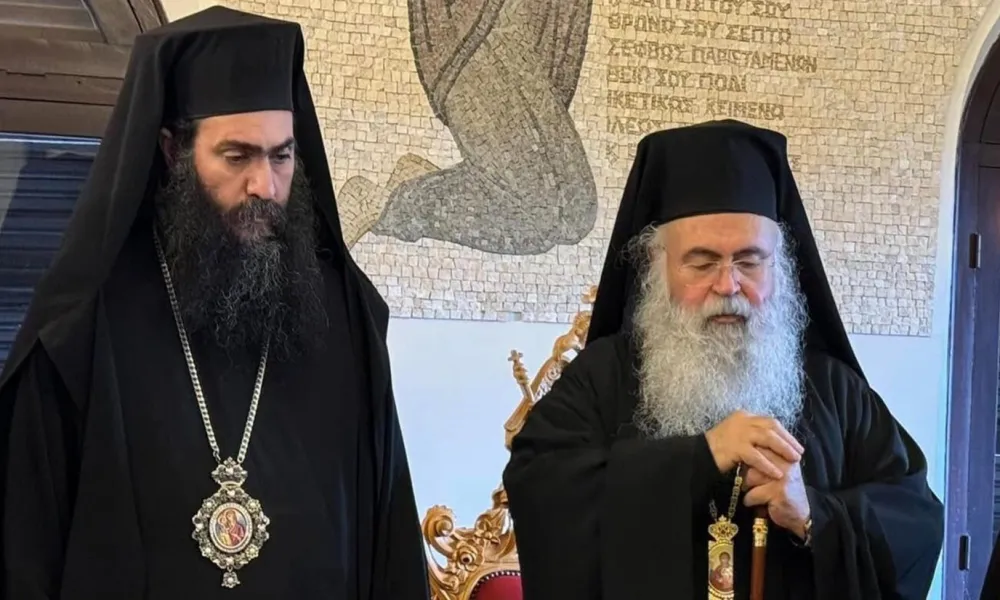
Behind the scenes, strong potential candidacies include the Very Reverend Archimandrite Ioannis, abbot of the Stavropegic Monastery of Apostle Varnavas, who is regarded in ecclesiastical circles as a figure with administrative and pastoral experience and deep knowledge of the Metropolis of Paphos. He served in the Metropolis for decades alongside the late Archbishop Chrysostomos II. Also being discussed are Chorepiscopus of Arsinoe Pangratios, the abbot of Chrysorroyiatissa Monastery, Bishop of Karpasia Christophoros and Bishop of Mesaoria Gregorios.
The great contradiction
The forthcoming election of a new Metropolitan of Paphos marks the first major act of implementation of the new Charter of the Church of Cyprus, which introduces significant changes both to the method of electing metropolitans and to the administration of ecclesiastical justice.
Under the new framework, the election of metropolitans now falls exclusively under the authority of the Holy Synod, in contrast to the previous system, which provided for public participation. By contrast, the existing system for the election of the Archbishop remains unchanged.
Theologian Theodoros Kyriakou comments to Politis that this differentiation raises questions about the coherence of the system.
“A new system is being adopted whereby metropolitans will be elected by the Synod. However, in the case of the Archbishop, the previous method remains in place. This is contradictory, because the Archbishop is also a bishop, and there should be a single method of election, either with public participation or without,” he noted.
Secret ballot
Explaining the new procedure, Mr Kyriakou said that interested candidates must submit their candidacy to the Secretariat of the Holy Synod, after which the members of the Synod will proceed to a secret ballot. If a candidate secures an absolute majority, he is elected. Otherwise, the process moves to a second round between the two leading candidates. If a tie persists, the result will be decided by lot.
Archdiocese: Calm will follow
From the Archdiocese’s side, press representative Yiannis Antoniades defended the new procedure, rejecting criticism voiced by members of the faithful, mainly on social media.
“With the new Charter, things will fall into place and the long‑awaited calm will come to the Church. The Charter and the election proclamation were unanimously approved by the Synod,” he said.
He added that the new process aligns with practices in other Orthodox Churches and, responding to criticism that Synod members will now “appoint whomever they wish”, argued that the previous system fuelled polarisation.
“Fanaticism, polarisation and personality cults largely stemmed from the previous process, where people voted as if it were a political election. We believe this will no longer exist,” Mr Antoniades said.
Balances within the Synod
One of the key questions is whether the Holy Synod enters the electoral process as a unified body or whether internal divisions persist. Theodoros Kyriakou describes a more complex picture.
“The alignments within the Synod are clear. There is a group that is, in some way, influenced by the Metropolitan of Limassol, which appears unlikely to participate actively in the electoral process with a candidate, as it considers Tychikos’ deposition to have been uncanonical. There is also the remaining group that is close to the Archbishop,” he said.
Of particular interest is his assessment that the Archbishop himself and the Metropolitan of Kykkos could play a decisive role.
“There are two powerful figures within the Synod: the Archbishop and the Metropolitan of Kykkos. If these two agree on a candidate, I believe the majority of the Synod will follow,” Mr Kyriakou noted.
The Archdiocese, however, projects an image of unity and institutional harmony within the Synod. Mr Antoniades stressed that discussion of the new Charter took place “in a climate of unity and cooperation, with constructive dialogue”, a fact he said is reflected in its unanimous approval.
“With the election of a new Metropolitan of Paphos, phenomena that wounded the Church, scandalised the faithful and caused division within the flock will be left behind. Paphos will once again have a metropolitan and we move forward,” he said, adding that “a new day is dawning for the Church”.
Figures and candidacies
By Friday afternoon, no official candidacy had been submitted, with interested parties able to declare their intention until Monday noon.
“Some may be waiting until the last moment, fearing possible vilification or social‑media lynching,” Mr Antoniades said.
Theodoros Kyriakou believes it is not impossible that the new Metropolitan may come from outside the current members of the Synod or the chorepiscopi. In such a case, he explains, episcopal ordination would first be required, followed by enthronement.
He further suggested that if this scenario unfolds, the ordination may not take place in Paphos but in Nicosia, due to the potential for reactions.
The shadow of Avvakoum
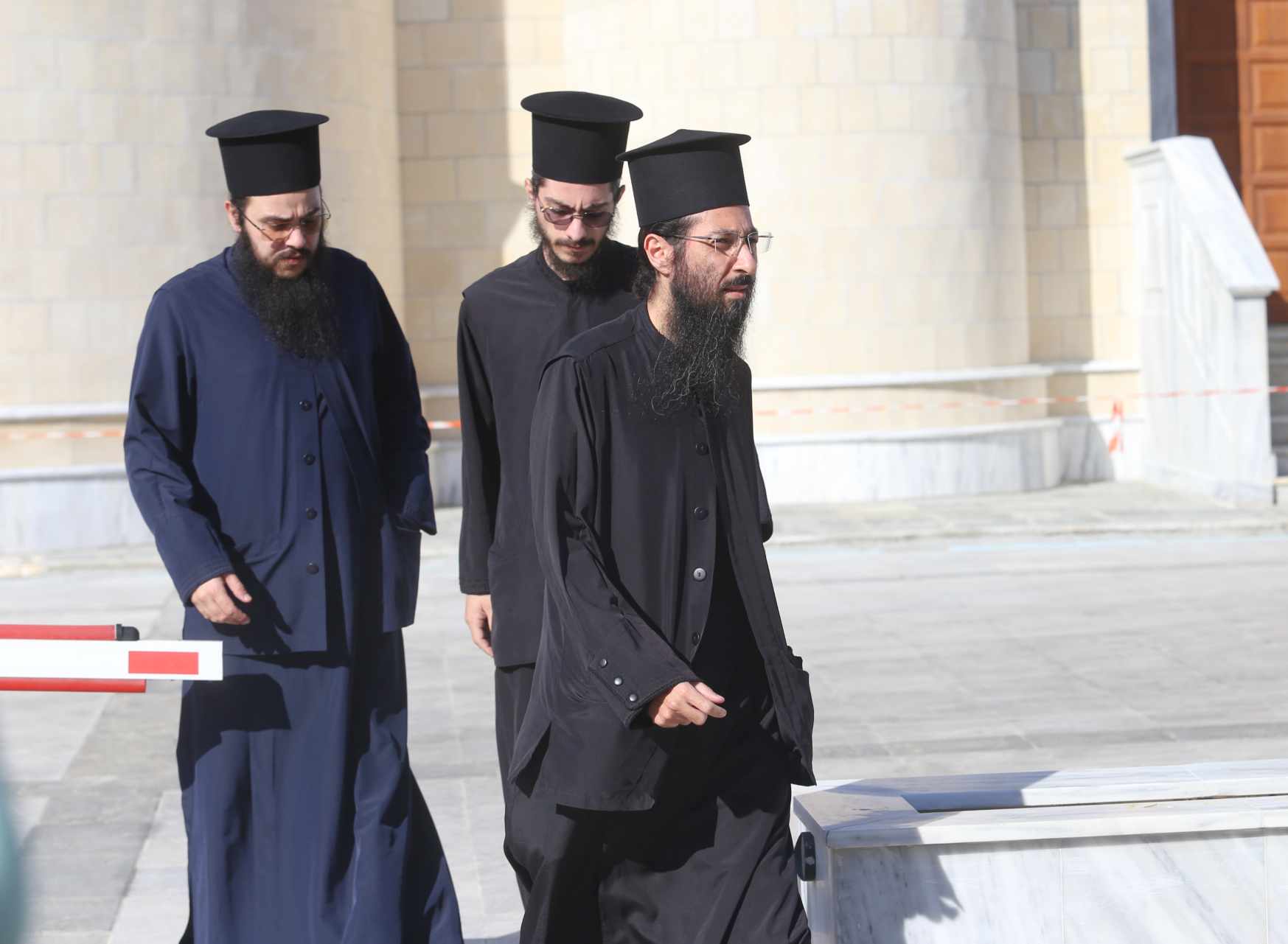
While the election in Paphos dominates the agenda, it is not the only issue weighing on the ecclesiastical landscape. Theodoros Kyriakou believes that the case of the deposed monks of the Monastery of Avvakoum remains an active ecclesiastical pending matter.
“Other issues continue to concern the Church, such as that of the deposed monks of Avvakoum, which remains unresolved and must be addressed, as it is taking on the characteristics of a sect and the Church cannot remain indifferent,” he said.
From the Archdiocese’s perspective, however, the position is clear: there is no new institutional development regarding the case.
“The amendment to the Charter provides for nothing in this regard. Decisions of previous Synods remain in force. The faithful are urged not to enter into spiritual contact with them, and the sacraments they perform are considered invalid by the Church, as they are deposed,” Mr Antoniades clarified.
He also linked the reform of ecclesiastical judicial procedure to the need for swifter handling of such cases, noting that procedures will be simplified, lawyers will no longer be present in the Synodal Court, and similar cases will be resolved in shorter timeframes.
What is at stake
In any case, Tuesday’s election will not only determine the new Metropolitan of Paphos. It will also record whether the Holy Synod is truly entering a period of stability or whether internal divisions remain active beneath the institutional façade of unity.