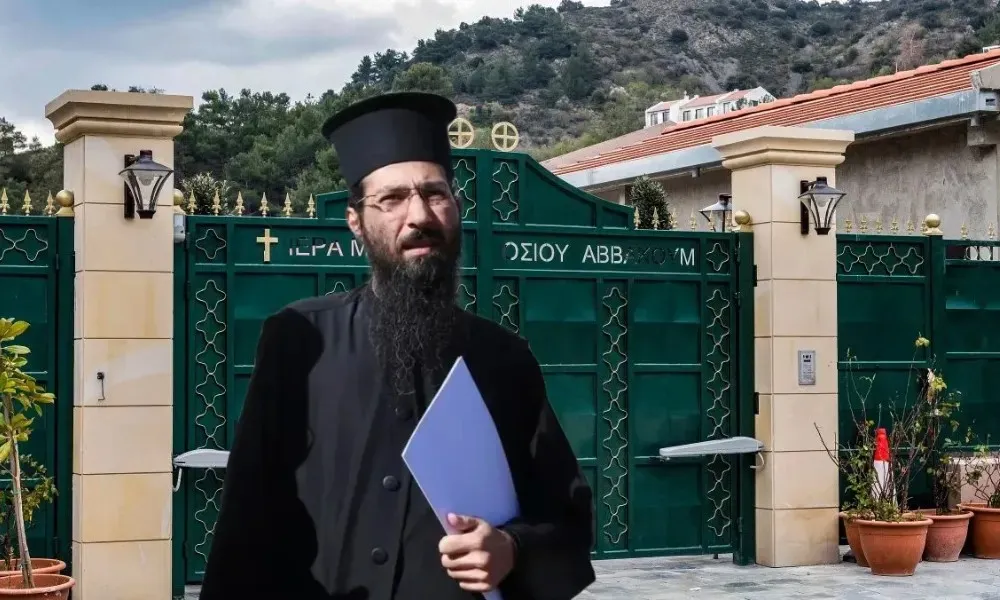

The documents, shared through communication channels associated with the figure described as the ‘Patriarch of Kyiv,’ Nikodimos, go beyond a simple acceptance of new members. They outline the creation of a full ecclesiastical structure in Cyprus, including references to a vicariate, parish, monastic brotherhood and a defined administrative hierarchy.
The development has sparked concern within Church circles, as the documents appear to directly link key figures from the Avvakoum case to an external ecclesiastical body not recognised by the Church of Cyprus.
The documents
According to material published on platforms linked to the so-called ‘Kyiv Patriarchate,’ Nektarios Georgiou has been accepted into the structure and assigned the role of locum tenens responsible for Cyprus.
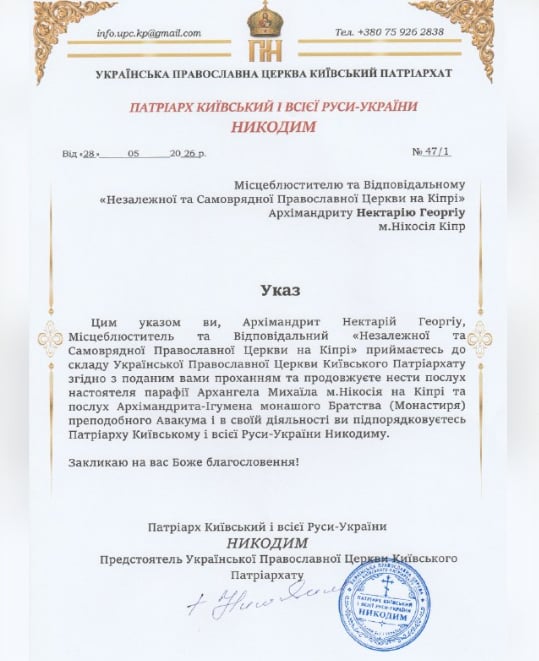
A second decree provides for the establishment of a Cyprus vicariate, the inclusion of a parish dedicated to Archangel Michael, and the integration of the brotherhood of Saint Avvakoum. In the same document, Mr Georgiou is appointed secretary of the vicariate, while also continuing his duties as head of the brotherhood.
Separate decrees also list the acceptance into the same structure of Avvakoum Christofi, Porfyrios Ttoulos, Isaïas Christofi, Spyridon Pittaras and Timotheos Flourentzou – all figures directly associated with developments at Avvakoum Monastery and subsequent decisions by the Church of Cyprus.
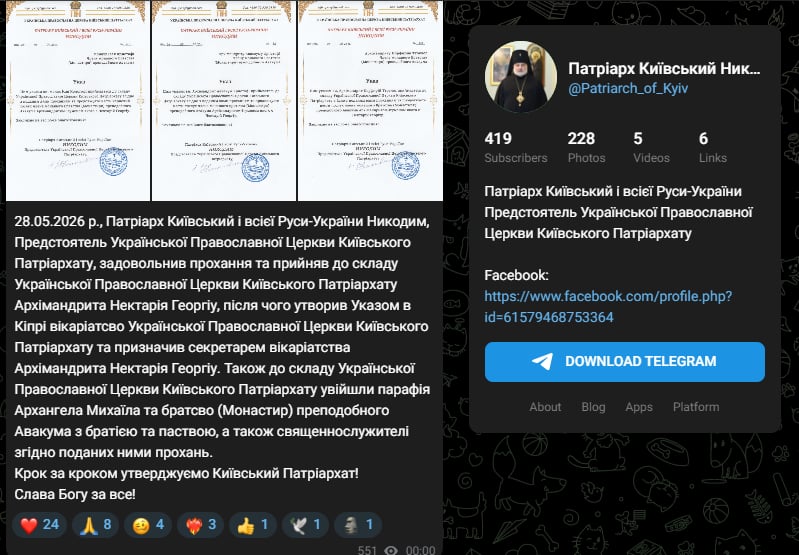
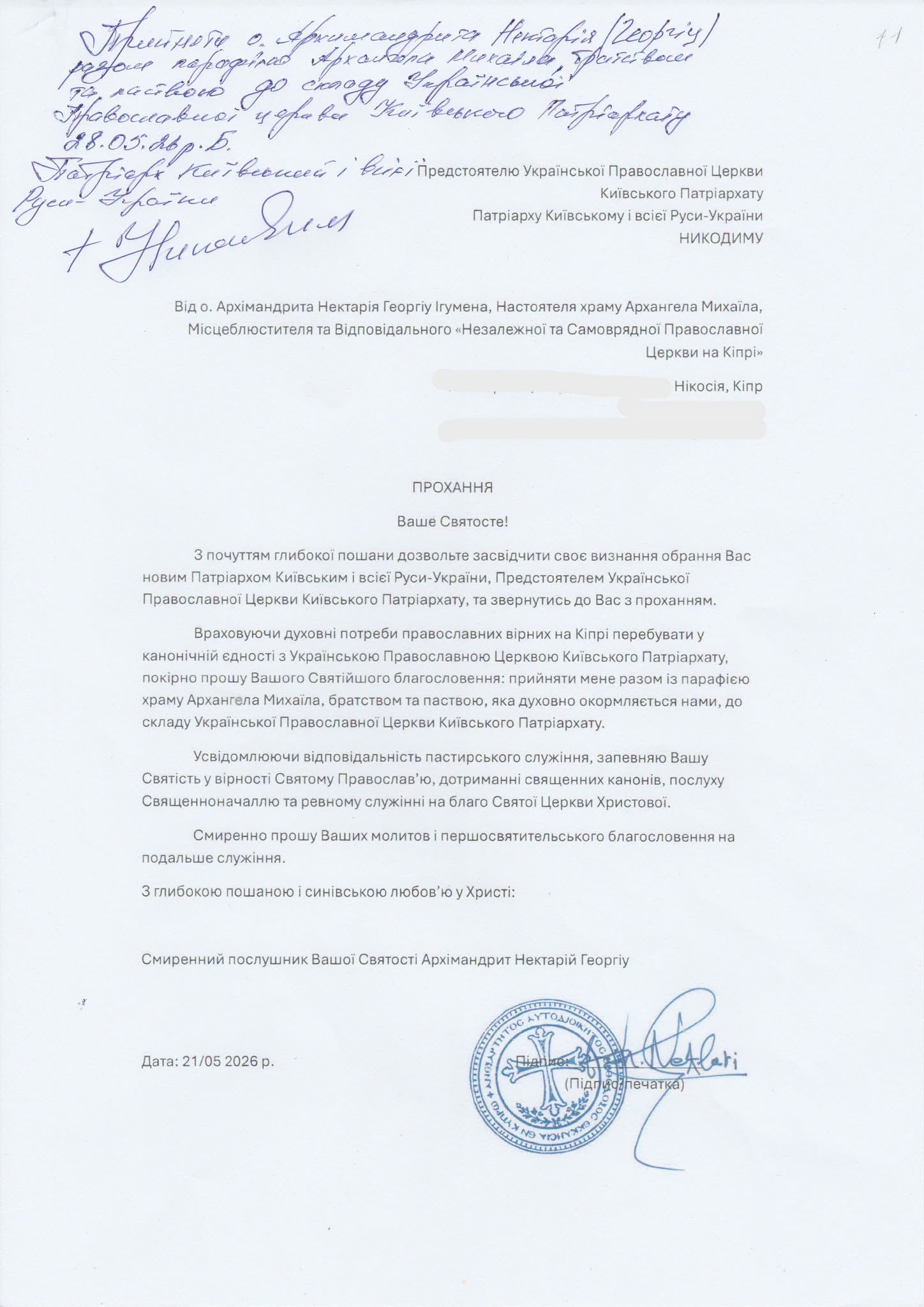
An accompanying statement notes that Mr Georgiou submitted a request for inclusion, which was accepted by Nikodimos. It also states that the brotherhood of Saint Avvakoum, its followers and other clergy are being incorporated into the new structure following similar requests.
The documents therefore describe not merely communication or support, but the establishment of an organised ecclesiastical framework with defined roles and institutional presence.
Nektarios’ position
Of particular interest is the stance taken by Nektarios Georgiou himself.
Asked about the reports, he avoided giving a clear answer, referring instead to a social media post in which he stated: “I have neither confirmed nor denied such a thing.”
In his wider statement, the former abbot focuses mainly on criticism of the media and the way events at Avvakoum Monastery were presented. He claims his side was not properly heard, that facts were distorted, and that others spoke on his behalf without seeking his position.
However, he does not directly address whether he submitted a request to join the structure or whether he accepts the role attributed to him.
This ambiguity is significant, as the claims in the documents could theoretically be denied outright if they were inaccurate.
What is the so‑called Kyiv Patriarchate?
The structure in question, under Nikodimos, is not recognised by the Church of Cyprus. Ecclesiastical sources describe it as schismatic and not in communion with the canonical Orthodox Churches.
Nonetheless, it presents itself as a ‘Kyiv Patriarchate’ and has reportedly developed activity in Ukraine and beyond in recent years.
Ecclesiastical concerns
Within Church circles, the matter is being treated with serious concern.
Sources familiar with ecclesiastical affairs say the issue goes beyond individual clergy, pointing instead to the possible emergence of a parallel Church presence in Cyprus. The documents refer not only to individuals but to a parish, a monastic brotherhood, a vicariate and an organised administrative structure.
Such a development, if confirmed, could raise significant canonical issues for those involved, particularly given the lack of recognition by established Orthodox Churches. Some sources do not rule out disciplinary consequences, including excommunication, for clergy who formally join such a structure.
The case is therefore being closely monitored, amid suggestions it could eventually be examined by the Holy Synod if the developments are confirmed or extended.
A shift in the debate
Until now, public discussion of the Avvakoum case had focused mainly on allegations, ecclesiastical procedures and the decisions that followed.
The emergence of these documents shifts the debate. The question is no longer only what happened at the monastery, but whether those involved are now seeking an alternative ecclesiastical platform outside the structures of the Church of Cyprus.
Despite the decrees, statements and appointments outlined in the documents, a clear public response from Mr Georgiou on whether he accepts or rejects the reported developments is still lacking.
For now, the situation remains fluid, but the disclosures open a new and potentially far-reaching chapter in an already complex case.